
Coccidiosis in poultry
Coccidiosis is associated with Eimeria parasites that affect the intestinal tract and can contribute to production losses in unprotected flocks. The material below covers why the topic matters, common risk factors and management principles. It does not prescribe treatments or dosages.

Understanding coccidiosis
Coccidiosis refers to intestinal infection associated with Eimeria species. Different species can affect different intestinal regions and vary in clinical and subclinical impact.
Economic importance often comes from reduced feed conversion, uneven growth and increased susceptibility to other challenges, even when mortality is not dramatic. Exact impact depends on species, challenge level, bird age and farm management.
Why it matters in commercial poultry
In intensive systems, birds share litter and housing environments where oocysts can accumulate if moisture and hygiene are poorly controlled. Broiler, layer and breeder programmes may face different risk profiles and require tailored veterinary strategies.
Common risk factors
Risk commonly rises with wet litter, high stocking stress, poor clean-out between flocks, mixed-age exposure on some farms, and periods of immunosuppression or concurrent disease.
Warm, humid seasons can favour environmental persistence. Farm teams should treat litter and water management as part of the same conversation as parasite risk.
What flocks may show
Professionals may observe changes in droppings, feed intake, growth uniformity or litter quality. Clinical signs vary and can overlap with other intestinal conditions. Only a veterinarian should interpret signs, diagnostics and programme choices.
Prevention and risk-reduction principles
Integrated approaches typically combine hygiene, litter management, vaccination where appropriate, and veterinary-designed pharmacological programmes. If rotation or shuttle strategies are used, they belong under qualified veterinary and regulatory guidance. This website does not instruct those programmes.
Biosecurity reduces introduction and spread of many pathogens; it also supports coccidiosis risk reduction by limiting contaminated traffic between houses.
Relevant Prix resources
Browse the poultry product catalogue and anticoccidial category listings for composition and packaging information. Product pages do not currently publish approved treatment claims until label data is verified. For educational flock topics, also see digestive health, biosecurity and water hygiene guides.
Common contributing factors
- Oocyst survival in litter and contaminated environments
- Variable flock immunity timing across production systems
- Interaction with other intestinal health challenges
- Inconsistent litter dryness and house hygiene
- Need for veterinary programme design rather than ad-hoc product use
Management considerations
- Discuss prevention and control options with a qualified veterinarian
- Maintain dry, well-managed litter where housing allows
- Monitor flocks for early performance and faecal indicators
- Coordinate biosecurity and house hygiene with overall gut-health plans
- Refer only to approved product labels for any anticoccidial or support product use
Related catalogue products
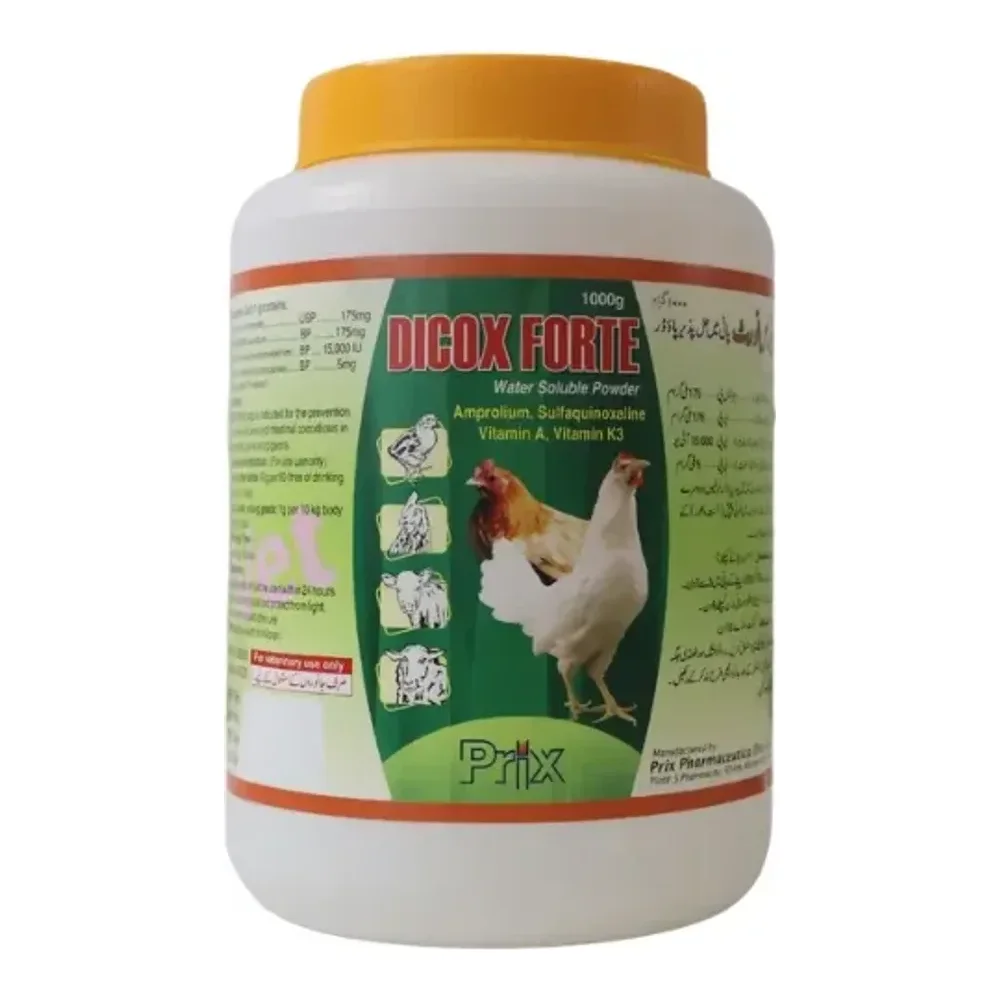
Products tagged to this topic for professional reference. Composition and packaging information is shown on each product page. Approved indications are published only when verified label data is available.

All Health Concerns
Need specialist guidance?
Our technical team can help with product selection and health programme development.
Contact Technical SupportRelated insights
- Prix Pharmaceutica at MEDEXPO Africa Tanzania 2026
- Prix Pharmaceutica Meeting in Italy on Animal Health Collaboration
- Chinese Partners Visit Prix Pharmaceutica Manufacturing Facility
Animal Categories
Responsible veterinary use: poultry health pages are educational. They do not diagnose disease or replace approved product labels or qualified veterinary advice. Contact Prix Pharmaceutica for product information requests via the Contact page.