
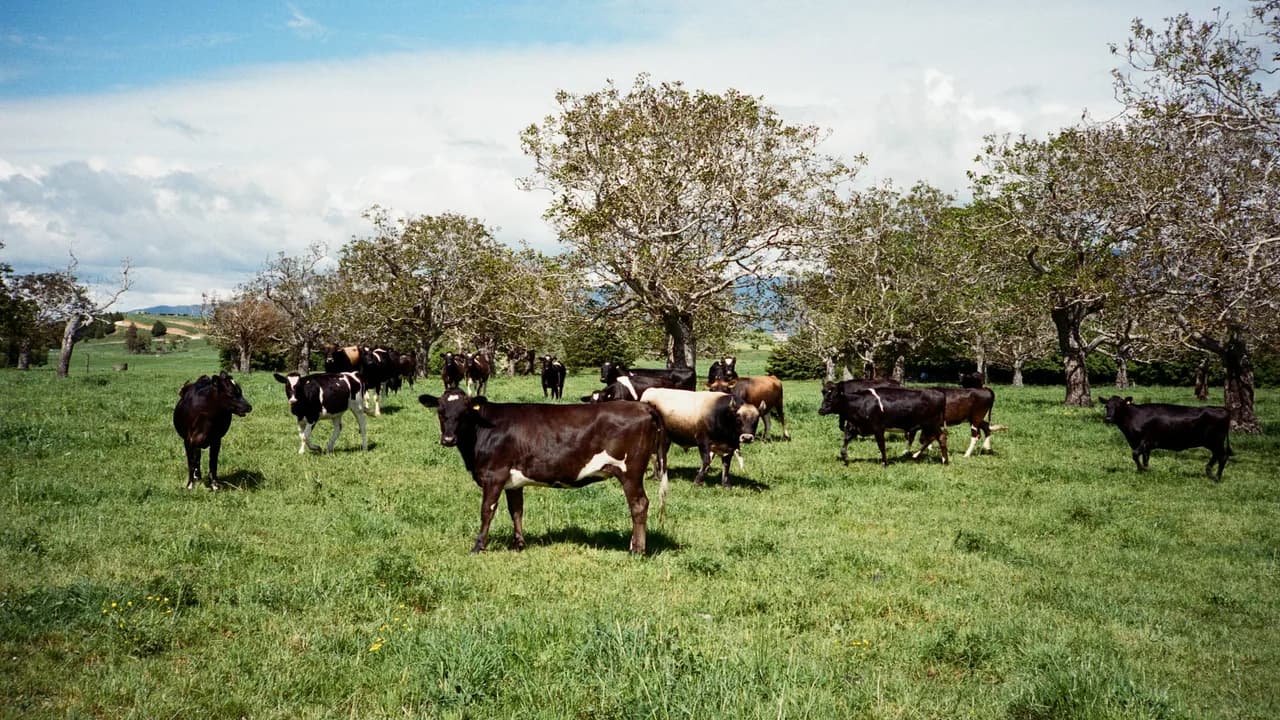
Grazing ruminants on green pasture illustrate the environmental context in which liver-fluke exposure can occur.
Estimated reading time: 11 min read
Liver fluke is a frequent search topic for cattle, sheep and goat producers, including livestock professionals working in Pakistan. Questions about signs, Fasciola, snail hosts, faecal testing, flukicides and withdrawal periods are understandable. Useful answers begin with parasite biology, diagnosis and farm context, not with a single medicine name or a fixed treatment calendar.
This article explains what liver fluke is, how the life cycle works, why snails and wet grazing matter, how cattle, sheep and goats may be affected differently, how veterinarians investigate infection, and how responsible control fits into a wider parasite programme. For the broader parasite overview, see common internal parasites in livestock. For programme-level deworming context, see livestock deworming in Pakistan. Educational pages on oxyclozanide, albendazole and levamisole discuss individual actives without prescribing treatment for named parasites.
What Is Liver Fluke?
In livestock education, “liver fluke” usually refers to trematode parasites in the genus Fasciola that infect the liver and bile ducts of ruminants. The parasite is distinct from the disease state it may cause. Infection of the definitive host (for example cattle, sheep or goats) follows environmental development that involves a snail intermediate host.
Two species are widely discussed in veterinary parasitology: Fasciola hepatica and Fasciola gigantica. Their geographic importance differs, and local epidemiology should not be assumed from international summaries alone. This article does not invent national prevalence figures for Pakistan.
Fasciola and Fasciolosis in Livestock
Fasciolosis (also called fascioliasis) describes disease associated with Fasciola infection. Veterinary sources commonly use fasciolosis for animal disease discussion, while human-health materials often use fascioliasis. Either term refers to disease caused by these liver flukes; the practical point for farms is that infection and clinical disease are not identical concepts.
Not every infected animal shows dramatic illness. Burden, host species, nutrition, concurrent disease and stage of infection influence outcomes. Buffalo may also be relevant where local production systems include them, but cattle, sheep and goats remain the focus of this educational overview.
How the Liver-Fluke Life Cycle Works
Authoritative veterinary parasitology describes a multi-stage cycle. Eggs leave an infected definitive host in faeces. Under suitable temperature and moisture conditions, miracidia develop and hatch in water. Miracidia are short-lived and must infect suitable lymnaeid snails to continue.
Inside the snail, asexual development proceeds through sporocyst and redial stages, eventually producing cercariae. Cercariae leave the snail, encyst on aquatic or damp vegetation and related environmental surfaces, and become metacercariae, the infective stage for grazing animals. Metacercariae can remain viable for extended periods under favourable damp conditions and are vulnerable to desiccation.
After ingestion with herbage, young flukes excyst in the intestine, migrate to the liver, and tunnel through liver parenchyma for several weeks before entering bile ducts, where adults mature and produce eggs. The prepatent period is typically measured in months rather than days. This sequence matters for diagnosis: faecal eggs appear only after patent infection is established.
Why Snails Matter in Liver-Fluke Transmission
Suitable freshwater or amphibious lymnaeid snails are essential intermediate hosts for Fasciola. Without compatible snails and conditions that allow snail infection and cercarial development, the classic pasture cycle cannot complete. That does not mean every snail carries liver fluke, or that every wet field is infected.
Local ecology matters. Snail habitat, water, vegetation and grazing access interact. Simply removing a few visible snails, or assuming dry farms have zero risk, oversimplifies transmission. Control discussions that mention snail habitat reduction or excluding animals from high-risk wet areas should be farm-specific and practical, not universal slogans.

Pasture, Water and Environmental Risk
General risk factors discussed in veterinary sources include wet or poorly drained grazing, suitable snail habitat, waterlogged ground, irrigation or water margins where relevant, contaminated grazing and livestock movement that introduces infected animals or exposes stock to high-risk areas. Seasonal and climatic conditions influence transmission pressure, but this article does not publish an invented Pakistan seasonal calendar.
Environmental exposure also explains reinfection. Treating animals without considering pasture contamination and ongoing metacercarial challenge may disappoint farms that expect medicine alone to solve a herd or flock problem. See also pasture and reinfection themes in common internal parasites in livestock.
Liver Fluke in Cattle
In cattle, chronic fasciolosis is more commonly discussed than rapidly fatal acute disease. Production effects such as reduced weight gain or milk yield, anaemia and submandibular oedema may occur, yet even heavily infected cattle can appear relatively quiet clinically. Cattle may develop partial acquired resistance over time after infection, which differs from the pattern described for sheep.
Do not assume cattle share identical susceptibility, clinical severity or diagnostic performance with sheep or goats. Dairy and beef systems may also notice production effects differently. Veterinary interpretation should remain species-aware.
Liver Fluke in Sheep
Sheep are more prone to acute and subacute fasciolosis associated with migration of immature flukes through the liver after ingestion of large numbers of metacercariae. Veterinary sources describe potentially severe disease, including anaemia and sudden death in acute presentations, and note that chronic infection can also be fatal in sheep. Sheep do not appear to develop the same protective resistance pattern described for cattle.
Acute disease can also interact with other infectious risks in some settings. Those complications are farm- and region-specific and require veterinary assessment rather than self-diagnosis from a checklist of signs.
Liver Fluke in Goats
Goats are grazing or browsing ruminants that can serve as definitive hosts for Fasciola where epidemiology supports exposure. Clinical patterns should not be assumed identical to cattle or sheep. Browsing behaviour, nutrition, flock management and concurrent parasites can all change how problems present.
Treat goats as a distinct veterinary population. Do not copy cattle or sheep assumptions about severity, diagnostics or medicine choice without checking approved product information for the species and seeking professional guidance.
Acute and Chronic Fasciolosis
Authoritative sources distinguish acute, subacute and chronic fasciolosis. Acute and subacute disease relate largely to immature fluke migration through liver tissue, with traumatic hepatitis and haemorrhage as key pathological themes. Chronic disease relates more to mature flukes in bile ducts, blood loss, bile-duct damage and longer-term production or health effects.
Species differences matter: sheep and related small ruminants are more often discussed in acute or subacute contexts, while cattle more often present chronically. Not every infected animal follows the same clinical course. Burden and timing of metacercarial intake strongly influence severity.
Possible Signs of Liver-Fluke Infection
Depending on host, burden and stage, veterinary sources discuss possible findings such as reduced growth or performance, poor body condition, weight loss, reduced appetite, anaemia, weakness, submandibular oedema (bottle jaw), reduced production and other non-specific clinical changes. Acute presentations in sheep may include more sudden severe illness.
None of these signs proves liver fluke by itself. Similar presentations occur with gastrointestinal nematodes, nutritional disorders, infectious diseases, other liver disease and many unrelated conditions.
Why Signs Alone Cannot Confirm Liver Fluke
Guessing “liver fluke” from bottle jaw or poor condition, then selecting a familiar flukicide brand, is an unsafe shortcut. Overlap with other parasites and non-parasitic disease is wide. Diagnosis protects animals, food safety and the long-term usefulness of veterinary medicines.

How Veterinarians Diagnose Liver Fluke
Veterinary investigation typically combines farm or flock history, grazing and water exposure context, clinical examination and laboratory methods where available. History may include seasonality, wet-area access, recent animal introductions, previous fluke treatments and concurrent disease.
Faecal sedimentation is a classic method for detecting Fasciola eggs in patent infections. Antibody ELISA tests and coproantigen approaches are available in some countries and can support earlier or complementary detection, with interpretation limits. Blood biochemistry such as gamma-glutamyltransferase may assist when bile-duct damage is present. Post-mortem examination of liver and bile ducts can be diagnostic when available. This article is not a do-it-yourself diagnostic protocol and does not publish numeric treatment thresholds.
Understanding Fecal Testing and Its Limitations
Faecal egg detection has important limits. Eggs of Fasciola are not found during acute prepatent infection, when immature flukes are migrating and damage may already be severe. In patent disease, egg output can vary from day to day, so repeated sampling may be needed. Sedimentation methods detect patent infections; they do not prove absence of fluke at all stages.
Where both F. hepatica and F. gigantica occur, eggs may not be reliably distinguished by microscopy alone. Sampling quality, laboratory method and parasite biology all affect usefulness. Absence of eggs should never be treated as automatic clearance for grazing risk or as a reason to ignore veterinary advice.
Responsible Liver-Fluke Control
Liver-fluke control is broader than administering a medicine. A responsible farm-specific approach may consider diagnosis, veterinary assessment, local parasite risk, environmental exposure, grazing management, wet-area management where practical, livestock movement, monitoring, treatment-effectiveness evaluation, authorized veterinary medicines where appropriate, and farm records.
There is no universal programme that fits every herd or flock in Pakistan or elsewhere. Programme design belongs with veterinary and farm planning, not with a fixed public calendar.
Managing Environmental Exposure
Where practical, reducing access to high-risk snail habitat, improving drainage of persistently waterlogged grazing, and managing movement of animals onto contaminated pasture can support control. These measures are complementary. They do not replace diagnosis or authorized medicine use when treatment is indicated, and they are not equally feasible on every farm.
Anthelmintics, Flukicides and Responsible Medicine Use
Veterinary flukicides exist. Active ingredients differ, activity against immature versus mature fluke stages can differ, formulations differ, approved species differ, dosing instructions differ and withdrawal requirements differ. Not every compound is authorised in every country, and stage activity is a major reason farms cannot treat “liver fluke” as a single medicine problem.
This article does not convert those facts into a treatment table, mg/kg schedule or product prescription. Do not equate liver fluke with any single active ingredient. Educational reading on oxyclozanide formulations is available in oxyclozanide in livestock. That link is further education about an anthelmintic/flukicide active ingredient and veterinary formulations. It does not mean oxyclozanide is automatically appropriate for every animal, Fasciola species, infection stage, clinical situation or Prix product.
Related educational overviews of other anthelmintic actives cover albendazole and levamisole. Those pages likewise do not assign a Prix product to liver fluke.
Resistance and Treatment Effectiveness
Parasite-control effectiveness can be affected by correct diagnosis, appropriate active ingredient and product selection under veterinary guidance, correct administration according to approved instructions, accurate weight assessment where labelled instructions require it, parasite stage at the time of treatment, anthelmintic resistance and ongoing reinfection from the environment.
Resistance of Fasciola to some flukicides has been reported internationally. Rigid drug-rotation calendars are not a proven standalone prevention strategy. Apparent treatment failure needs careful veterinary interpretation because reinfection, incorrect stage targeting and administration problems can look like resistance. Broader prudent-use principles are summarised by the World Organisation for Animal Health (WOAH) for grazing livestock anthelmintics.
Withdrawal Periods and Food Safety
Veterinary medicines used in food-producing animals can have product-specific withdrawal requirements before meat or milk enters the food chain. Meat and milk requirements are not automatically identical. Different flukicides and formulations can have different restrictions. There is no universal liver-fluke medicine withdrawal period. Follow the approved information for the medicine actually used.
Monitoring and Farm Records
Useful records identify animals or groups, dates, products and batches where available, clinical observations, diagnostic results and grazing history. Records support food-safety compliance when withdrawal requirements apply, help veterinarians interpret repeated problems and reduce informal or duplicated treatment.

Learn More About Livestock Parasite Control
Explore verified catalogue information through the livestock hub and product catalogue. Technical literature is available under resources, and manufacturing context is summarised on Science & Quality. Continue with the cluster pages on common internal parasites and livestock deworming in Pakistan for programme-level context.
In Pakistan, veterinary medicines are regulated under the framework administered by the Drug Regulatory Authority of Pakistan (DRAP).

Signs alone cannot confirm liver fluke. Parasite stage and species can matter. Diagnosis and control should consider farm-specific conditions. Veterinary medicine selection, dosing and withdrawal requirements are product-specific. Follow approved product information and use veterinary guidance where appropriate. This article is educational and does not replace authorised labelling or professional veterinary advice.
References
- Merck Veterinary Manual. Fasciola hepatica in ruminants.
- Merck Veterinary Manual. Overview of fluke infections in ruminants.
- World Organisation for Animal Health (WOAH). Fasciola gigantica (infection with).
- World Organisation for Animal Health (WOAH). Responsible and prudent use of anthelmintic chemicals to help control anthelmintic resistance in grazing livestock species.
- Food and Agriculture Organization of the United Nations (FAO). The epidemiology, diagnosis and control of helminth parasites of ruminants.
- Food and Agriculture Organization of the United Nations (FAO). Guidelines on resistance management and integrated parasite control in ruminants.
- World Health Organization (WHO). Neglected tropical diseases: fascioliasis (Q&A).
- Drug Regulatory Authority of Pakistan (DRAP). Veterinary drugs.
Frequently Asked Questions
Prix Knowledge Centre
Stay informed on animal health insights
Receive updates on veterinary pharmaceuticals, poultry and livestock healthcare, and company news from Prix Pharmaceutica.
Explore our veterinary solutions
Browse veterinary pharmaceuticals and nutritional products for livestock, poultry, equine and companion animals, with technical support available on request.
Related articles
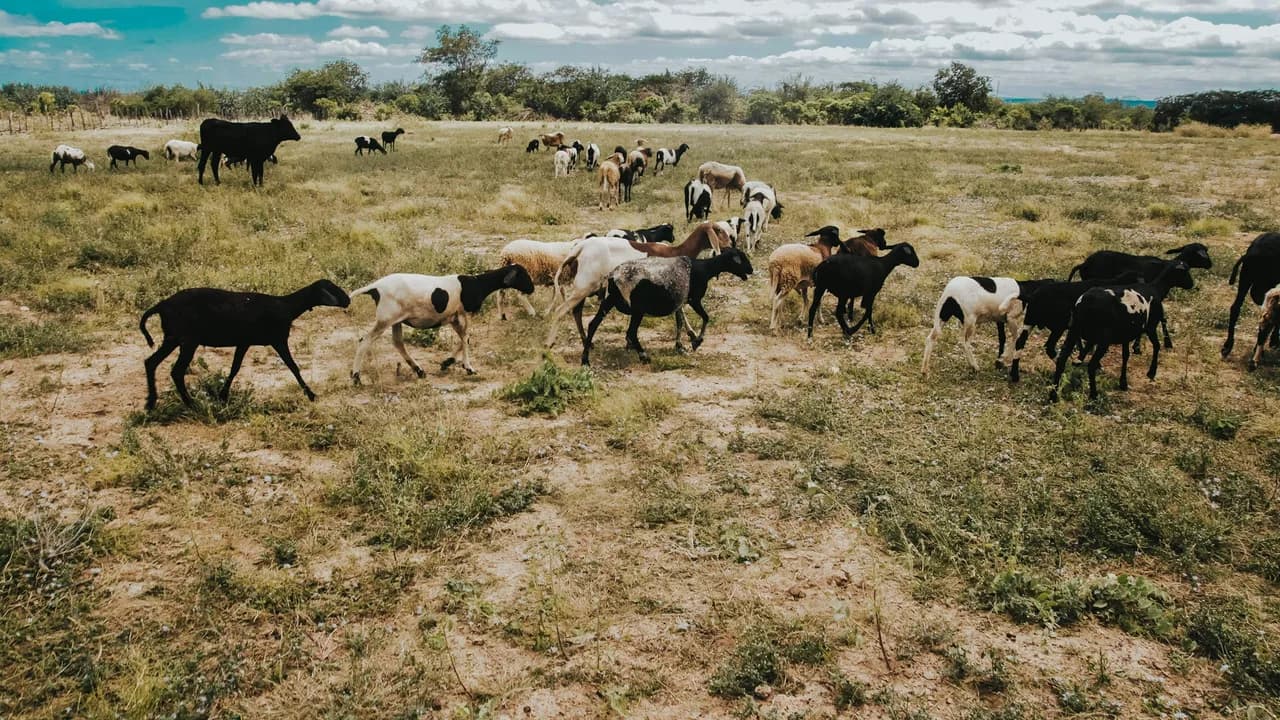
Common Internal Parasites in Cattle, Sheep and Goats: Signs, Diagnosis and Control
An educational overview of common internal parasites in cattle, sheep and goats covering parasite groups, possible signs, diagnosis, faecal egg counts, resistance and responsible control.
Read article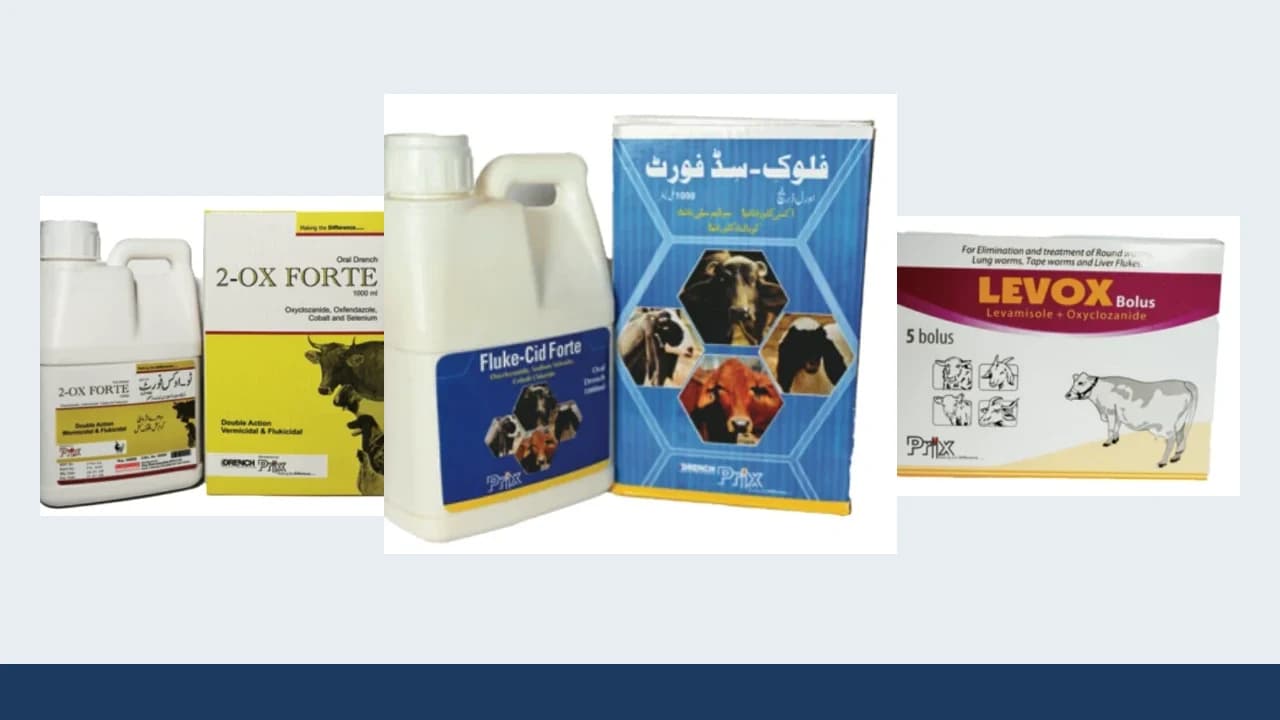
Oxyclozanide in Livestock: Veterinary Uses, Formulations and Responsible Fluke Control
An educational guide to oxyclozanide in livestock covering formulations, combination products, fluke-control context, resistance, withdrawal principles and verified Prix products.
Read article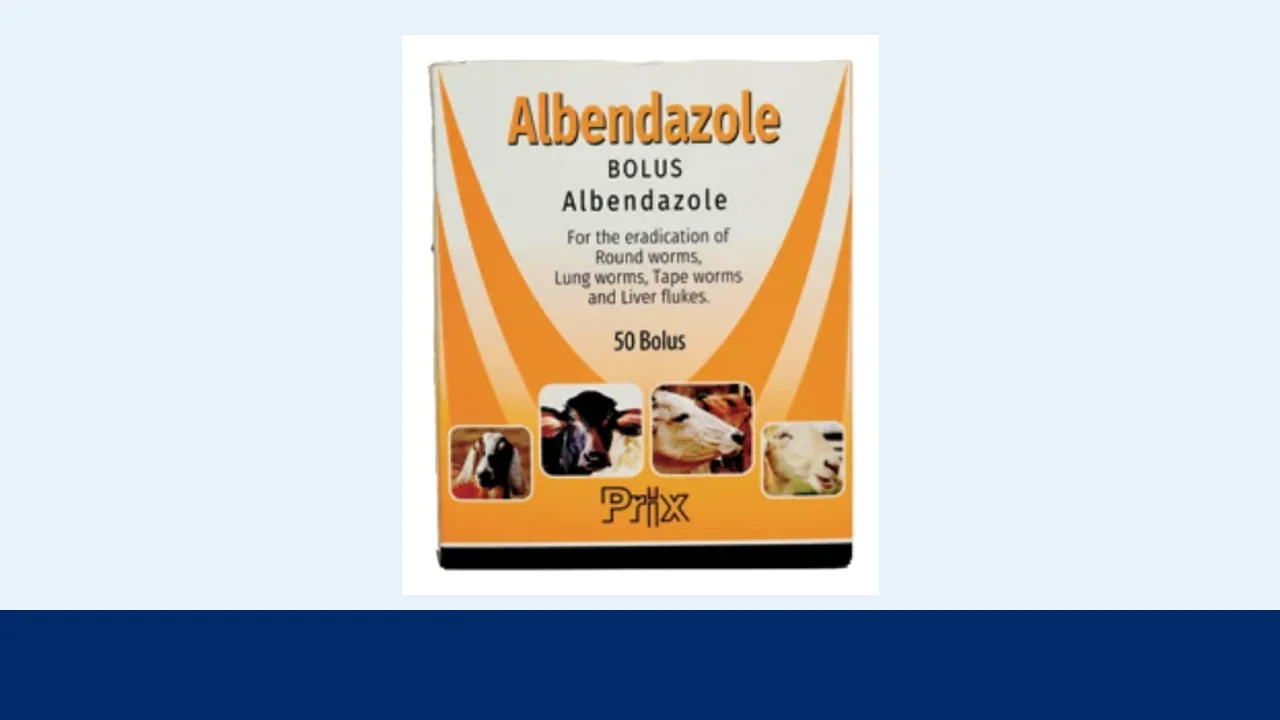
Albendazole in Veterinary Medicine: Uses, Dosage Forms and Responsible Use
An educational guide to albendazole in veterinary medicine covering dosage forms, formulation strength versus dose, resistance, withdrawal principles and verified Prix products.
Read article