
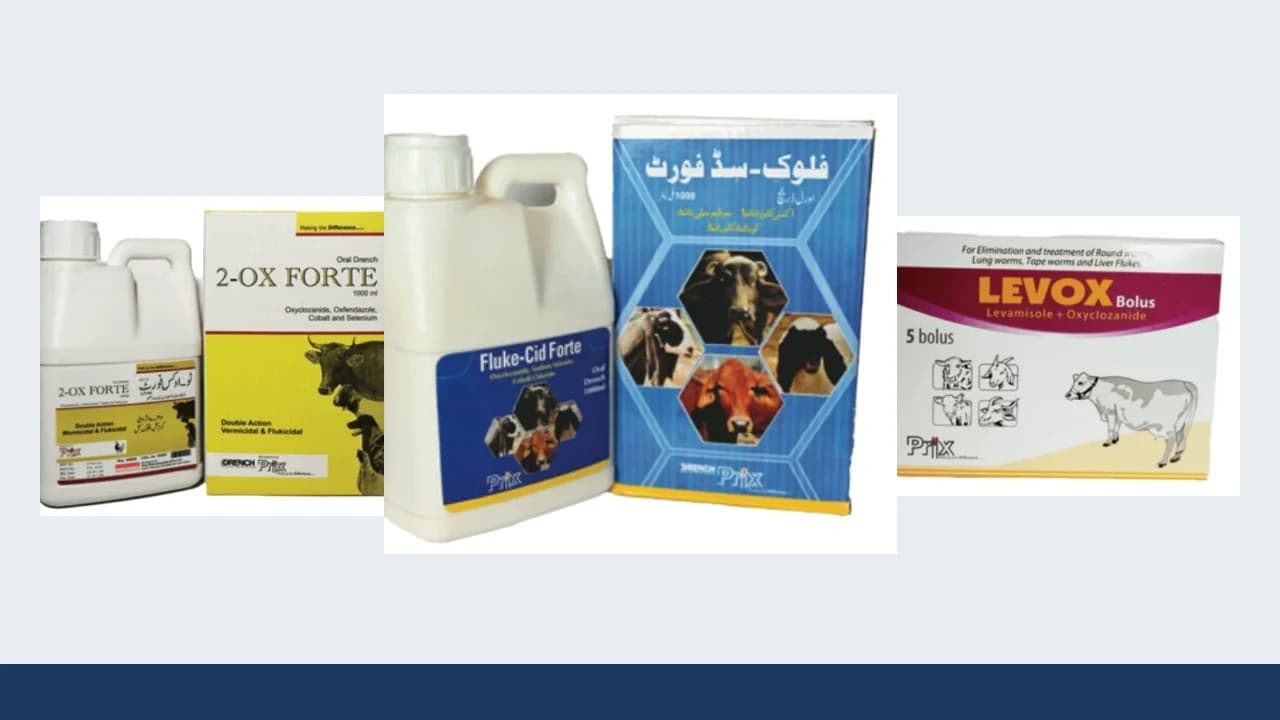
Editorial composition using verified Prix packaging photography. Packaging artwork is unmodified.
Estimated reading time: 10 min read
Oxyclozanide is a veterinary anthelmintic frequently discussed in livestock parasite-control programmes, especially where fluke exposure is part of the clinical or farm-risk conversation. Searches for oxyclozanide often lead to questions about dose, liver fluke treatment, cattle, sheep or goats, withdrawal and which product to use. Those questions matter. They also cannot be answered with one universal figure that covers every veterinary medicine containing oxyclozanide.
This article explains what oxyclozanide is at an introductory educational level, how fluke risk is discussed in grazing livestock, why formulations differ, and why approved product information and veterinary guidance must drive decisions. It also outlines verified Prix Pharmaceutica oxyclozanide-containing products as distinct catalogue entries. For the broader parasite-control foundation, start with livestock deworming in Pakistan. Related active-ingredient overviews cover albendazole and levamisole.
What Is Oxyclozanide?
Oxyclozanide is a veterinary anthelmintic used in livestock parasite-control medicine. Educational pharmacology and parasitology sources commonly discuss it in relation to fluke-control programmes for ruminants. It is not a treatment for every internal parasite, and class-level education is not a claim about every commercial product.
Veterinary use of any oxyclozanide-containing product depends on formulation, concentration, labelled coverage, animal species, approved product information and regulatory authorisation. Two products that both contain oxyclozanide are not automatically interchangeable.
Oxyclozanide in Veterinary Parasite Control
Authoritative overviews of ruminant parasites discuss flukicides and related anthelmintic options as part of integrated control, alongside benzimidazoles, imidazothiazoles and other classes where labelled and relevant. Oxyclozanide sits in that educational landscape as one medicine discussed for fluke-related indications when a specific product is authorised for that use.
A general association with fluke control does not prove that every Prix formulation shares the same spectrum, species authorisation or administration instructions. Product claims belong on the approved label for that registered medicine.
Understanding Liver Flukes in Livestock
Liver flukes are trematode parasites that can affect grazing ruminants. Exposure risk is shaped by environmental and management factors, including wet or poorly drained grazing, water bodies and farm husbandry patterns that influence contact with infective stages. Local epidemiology can vary, so regional risk should not be assumed from a single farm story.
Clinical signs alone are not a reliable diagnosis. Reduced productivity, anaemia-related signs or other non-specific findings may have many causes. Parasite species and stage can matter for interpretation, and veterinary assessment, including diagnostic support where appropriate, remains part of responsible decision-making. This section is introductory context only. It is not a dedicated liver-fluke protocol.
Why Diagnosis and Parasite Risk Matter
Parasite-control decisions can depend on diagnosis or risk assessment, the parasite involved, farm history, species and production context, and the approved information for any medicine considered. Do not treat oxyclozanide as a default response whenever fluke is suspected. Suspected fluke exposure is a reason for veterinary evaluation, not an automatic product prescription.
Broader diagnostic and programme themes are covered in livestock deworming in Pakistan.
Why Oxyclozanide Formulations Differ
Manufacturers present oxyclozanide in different dosage forms, strengths and combination profiles for practical administration, packing and labelled use cases. An oral drench and a bolus may both contain oxyclozanide while differing in how content is expressed, how the product is handled on farm and what the approved documentation authorises.
Formulation choice is therefore a documentation and veterinary decision, not a preference based on brand familiarity alone. Review composition, dosage form, pack information and species context before use.
Single-Active and Combination Formulations
Products that contain oxyclozanide may differ substantially because they can present oxyclozanide with mineral components or combine it with other anthelmintic actives. Verified Prix examples illustrate the point without ranking products: Fluke-Cid Forte contains oxyclozanide with sodium selenite and cobalt chloride; 2-Ox Forte combines oxyclozanide with oxfendazole plus selenium and cobalt; Vital Cure combines oxyclozanide with levamisole hydrochloride and cobalt sulphate; Levox combines levamisole hydrochloride with oxyclozanide in a bolus presentation.
The presence of the same active ingredient does not make products interchangeable. Combination and multi-component products are distinct medicines with their own composition, pack information and approved documentation. Do not treat a combination product as an oxyclozanide-only medicine, and do not substitute one formulation for another without label review.
Oral Drenches and Bolus Formulations
Common veterinary presentations include oral drenches or liquids and bolus or tablet-type solid forms. Concentration statements describe how much active ingredient is present in a defined unit of the product.
For example, 3.400 g per 100 ml in an oral drench and 1400 mg in one bolus are expressions of formulation content. They are not interchangeable dosing instructions. Converting one product’s strength into another product’s administration plan without approved labelling is unsafe and unsupported.
Why Species, Body Weight and Product Information Matter
Cattle, buffalo, sheep and goats are often discussed together in livestock parasite education, yet species differences matter. Labelled species, production stage and concurrent conditions can change whether a product is appropriate. Do not assume that every oxyclozanide-containing formulation is approved for every ruminant species.
Body weight matters because many veterinary anthelmintic instructions relate administration to weight. Accurate assessment supports correct use of the approved directions for that product. Approved product information remains the primary reference for composition, labelled use, packing and storage guidance.
Why There Is No Universal Oxyclozanide Dose
Visitors often search for a single mg/kg figure, a millilitre-per-weight calculator, a bolus-per-weight shortcut or a fixed fluke-treatment calendar. Those answers cannot responsibly be generalized across veterinary products. Dose depends on the specific registered formulation and concentration, the species and use context, and the approved product documentation.
This article therefore does not publish dosing tables, mg/kg schedules, drench-volume calculators or treatment frequencies. Where dosing information is required, use the label and professional veterinary guidance for the product actually selected.
Breeding and pregnancy precautions are likewise product- and species-specific in veterinary practice. Do not assume that oxyclozanide is either universally safe or universally prohibited in pregnant animals. Check the approved information for the medicine in use and seek veterinary guidance.
Responsible Fluke and Parasite Control
Oxyclozanide is a tool within a wider programme that includes diagnosis or risk assessment, farm management, accurate product selection and follow-up. Using any anthelmintic without regard to parasite risk, animal assessment or label instructions weakens both clinical outcomes and long-term medicine usefulness.
Industry and quality context for veterinary medicines is outlined in veterinary pharmaceutical companies in Pakistan. Related active-ingredient education is available for levamisole and albendazole.
Anthelmintic Resistance and Treatment Effectiveness
Anthelmintic resistance develops when a larger share of a parasite population survives exposure to a medicine that previously controlled susceptible parasites. The World Organisation for Animal Health (WOAH) frames prudent anthelmintic use in grazing livestock as essential to preserving the limited chemical options still available.
Selection pressure rises with repeated unnecessary treatment, incomplete administration, underassessment of animals and exclusive reliance on medicines without farm-level planning. Correct diagnosis and appropriate product selection matter because the wrong formulation or incomplete use can leave parasites under selective pressure. Switching product names on a fixed calendar is not a proven resistance-prevention strategy by itself. Monitoring treatment effectiveness and integrating veterinary oversight remain central, as discussed in livestock deworming in Pakistan.
Parasite Control Beyond Veterinary Medicines
Livestock parasite control may also involve farm management, grazing and pasture considerations, hygiene, manure management, monitoring, biosecurity, nutrition and general animal health, and veterinary assessment. No single measure guarantees prevention. Medicines support a programme; they do not replace husbandry and professional judgement.
Withdrawal Periods and Food Safety
A withdrawal period is the interval that must elapse after treatment before meat or milk from a treated animal may enter the food chain, according to approved product information and applicable rules. There is no universal oxyclozanide withdrawal period shared by all formulations.
Requirements can differ by formulation, concentration, species, labelled use and meat or milk production context. Combination products do not automatically share the same withdrawal requirements. Follow the specific product documentation for the medicine administered.
Storage, Handling and Record Keeping
Store oxyclozanide-containing products according to approved labelling, usually in original packaging and away from excessive heat, light or moisture. Secure storage reduces accidental or informal use. Keep treatment records that identify animals, product, batch details where available, dates and observed outcomes. Records support food-safety compliance and veterinary follow-up.

Oxyclozanide-Containing Products in the Prix Pharmaceutica Portfolio
Prix Pharmaceutica lists multiple distinct oxyclozanide-containing livestock products. The table below compares verified catalogue attributes only. It is not a treatment guide and does not rank effectiveness.
| Product | Dosage form | Verified composition | Pack size | View |
|---|---|---|---|---|
| Fluke-Cid Forte | Oral drench | Each 100 ml contains: Oxyclozanide 3.400 g; Sodium selenite 0.035 g; Cobalt chloride 0.075 g | 100 ml, 500 ml, 1 litre | Product page |
| 2-Ox Forte | Oral drench | Each 100 ml contains: Oxyclozanide 6.250 g; Oxfendazole 2.265 g; Selenium (as sodium selenite) 0.05 g; Cobalt (as sulphate) 0.167 g | 100 ml, 500 ml, 1 litre | Product page |
| Vital Cure | Oral drench | Each 100 ml contains: Oxyclozanide 3.000 g; Levamisole HCl 1.5 g; Cobalt sulphate 0.382 g | 150 ml, 500 ml, 1 litre | Product page |
| Levox | Bolus | Each bolus contains: Levamisole HCl 1000 mg; Oxyclozanide 1400 mg | 5 bolus | Product page |
Fluke-Cid Forte (registration 063691), 2-Ox Forte (registration 049528), Vital Cure (registration 063690) and Levox (registration 043279) are distinct catalogue entries. Do not merge these records or substitute one product’s labelling for another. No additional verified oxyclozanide-containing livestock products were identified in the current repository beyond these four.
Explore Livestock Products and Resources
When evaluating oxyclozanide-containing medicines, review registration and composition details, dosage form, packing and storage guidance, and access to technical documentation. In Pakistan, veterinary medicines are regulated under the framework administered by the Drug Regulatory Authority of Pakistan (DRAP).
Manufacturing and quality context is summarised on the Science & Quality page. Catalogues and literature are available under resources. Browse the livestock category hub, compare presentations in the product catalogue, or return to the cluster overview on livestock deworming in Pakistan.
Parasite-control decisions should consider the animal species, suspected parasite, farm conditions, specific formulation and approved product information. Dosing and withdrawal requirements are product-specific, and veterinary guidance should be used where appropriate. This article is educational and does not replace authorised labelling or professional veterinary advice.
References
- World Organisation for Animal Health (WOAH). Responsible and prudent use of anthelmintic chemicals to help control anthelmintic resistance in grazing livestock species.
- Merck Veterinary Manual. Overview of fluke infections in ruminants.
- Merck Veterinary Manual. Pharmacodynamics: mechanisms of anthelmintic action in animals.
- Food and Agriculture Organization of the United Nations (FAO). The epidemiology, diagnosis and control of helminth parasites of ruminants.
- Drug Regulatory Authority of Pakistan (DRAP). Veterinary drugs.
Frequently Asked Questions
Prix Knowledge Centre
Stay informed on animal health insights
Receive updates on veterinary pharmaceuticals, poultry and livestock healthcare, and company news from Prix Pharmaceutica.
Explore our veterinary solutions
Browse veterinary pharmaceuticals and nutritional products for livestock, poultry, equine and companion animals, with technical support available on request.
Related articles
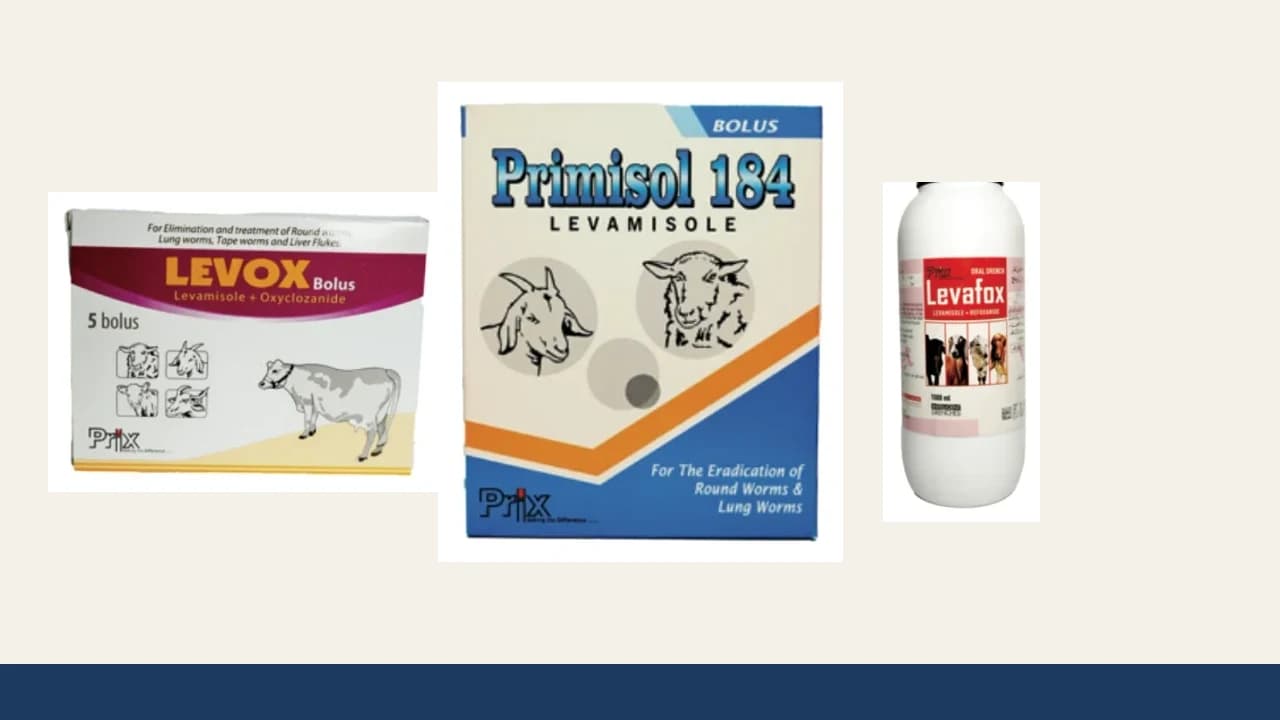
Levamisole in Veterinary Medicine: Uses, Formulations and Responsible Parasite Control
An educational guide to levamisole in veterinary medicine covering formulations, single-active versus combination products, resistance, withdrawal principles and verified Prix products.
Read article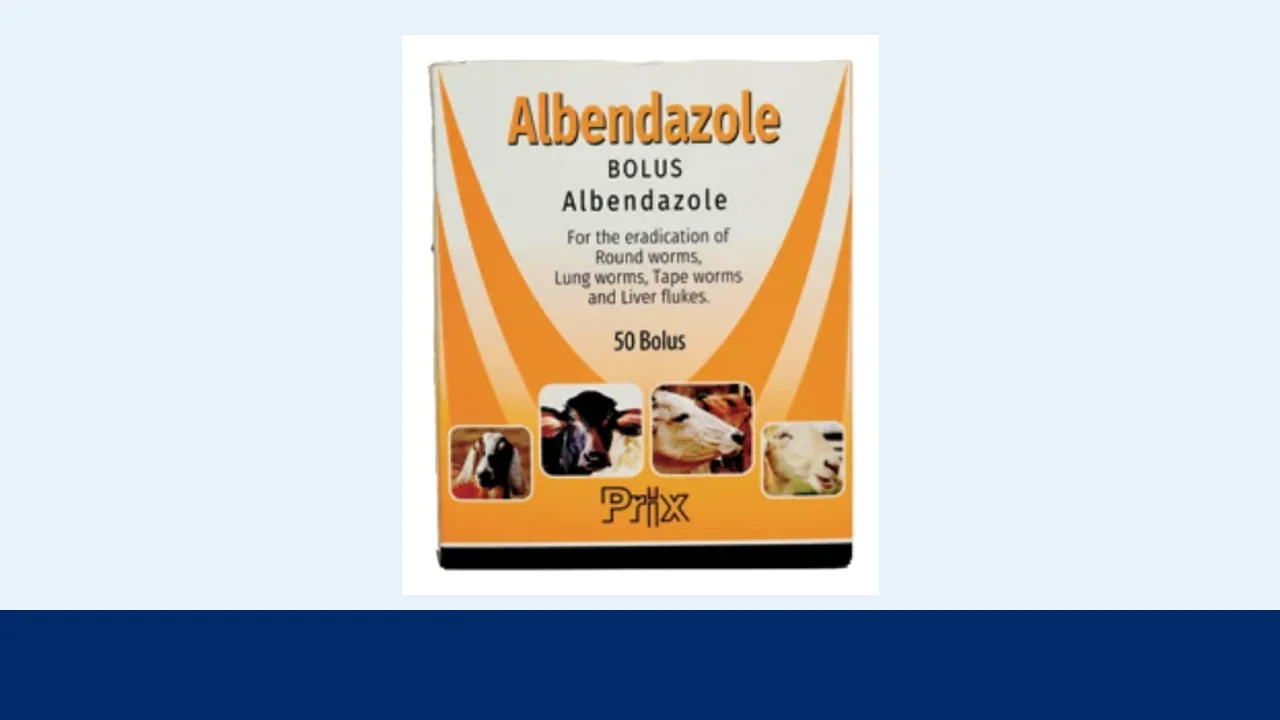
Albendazole in Veterinary Medicine: Uses, Dosage Forms and Responsible Use
An educational guide to albendazole in veterinary medicine covering dosage forms, formulation strength versus dose, resistance, withdrawal principles and verified Prix products.
Read article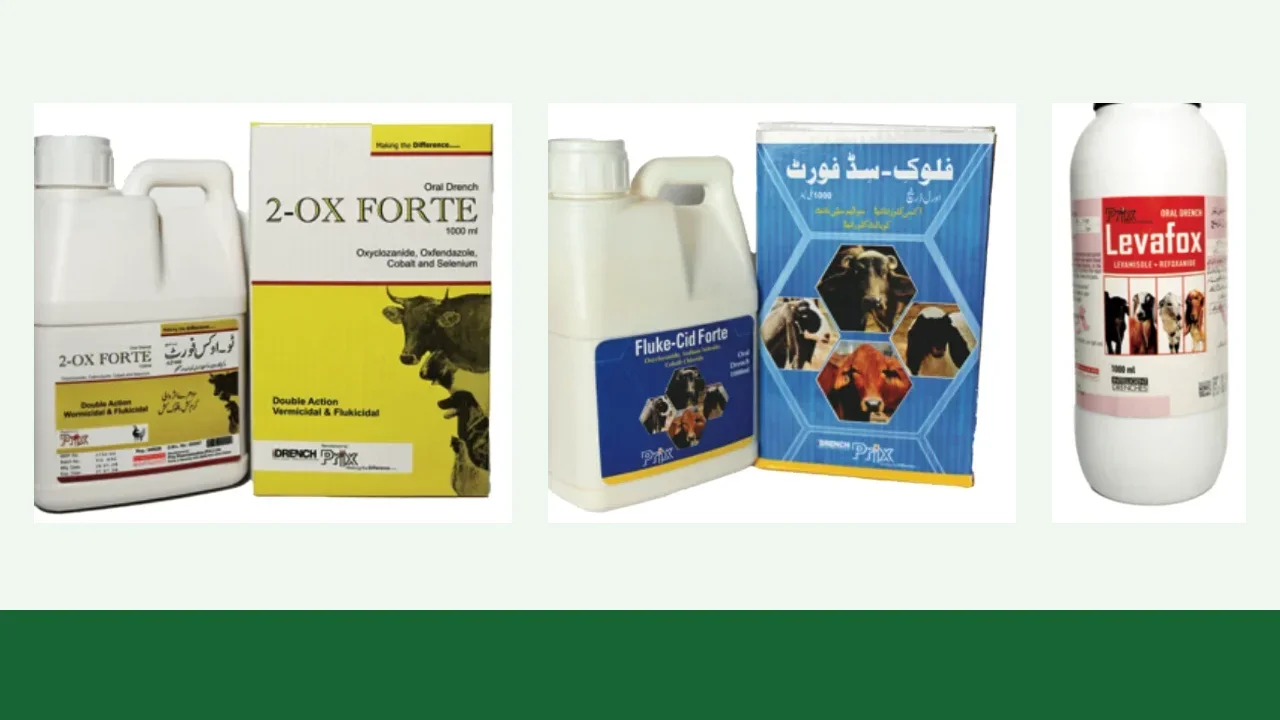
Livestock Deworming in Pakistan: Parasite Control, Anthelmintics and Veterinary Guidance
An educational guide to livestock deworming in Pakistan covering internal parasites, anthelmintics, resistance, farm management and responsible veterinary parasite control.
Read article