
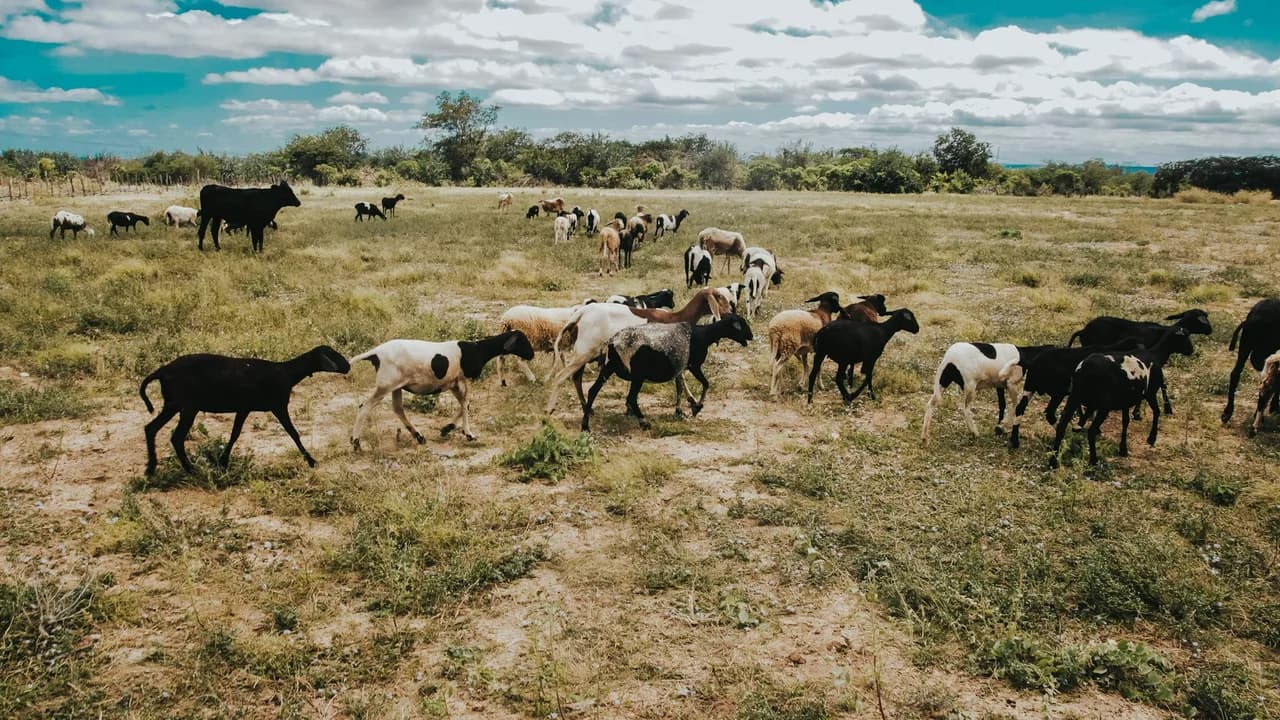
A pastoral livestock scene representing cattle, sheep and goat health in farm environments.
Estimated reading time: 11 min read
Internal parasites are a routine concern for cattle, buffalo, sheep and goat production. Farmers and veterinarians search for information about worms, liver fluke, faecal testing and how often animals should be dewormed. Those questions matter. Useful answers start with parasite biology, diagnosis and farm context, not with a single medicine name.
This article explains major internal parasite groups affecting ruminants, possible clinical signs, why symptoms alone cannot identify a parasite, how veterinarians investigate problems, why life cycles and pasture exposure matter, and how responsible control and anthelmintic resistance fit together. For the broader deworming programme framework, see livestock deworming in Pakistan. Related educational pages cover albendazole, levamisole and oxyclozanide as distinct active-ingredient overviews. Those links are educational, not treatment recommendations for named parasites.
What Are Internal Parasites?
Internal parasites live inside the animal host for part or all of their life cycle. In cattle, sheep and goats, the parasites most often discussed in veterinary education are helminths: nematodes (roundworms), trematodes (flukes) and cestodes (tapeworms). Different parasites occupy different sites, such as the gastrointestinal tract, liver and bile ducts, or lungs where relevant.
Not every parasite has the same clinical impact. Burden, host immunity, nutrition, age and concurrent disease all influence whether infection becomes a production or welfare problem.
Why Internal Parasites Matter in Livestock
Significant parasite burdens can reduce growth, body condition, feed efficiency and production. In some cases they contribute to anaemia, diarrhoea or other clinical disease. Effects vary by parasite group, host species and farm conditions. Parasite control therefore belongs inside a wider herd or flock health plan, not as an isolated purchase decision.
Major Types of Internal Parasites
Authoritative overviews of ruminant parasitology group internal helminths into nematodes, trematodes and cestodes. The sections below summarise each group at an educational level. They do not prescribe medicines for individual parasites.
Gastrointestinal Roundworms
Gastrointestinal nematodes are among the most frequently discussed internal parasites of grazing ruminants. Educational sources commonly reference genera such as Haemonchus, Ostertagia or Teladorsagia, Cooperia, Trichostrongylus, Oesophagostomum and Nematodirus. These names describe parasite groups with different preferred hosts, sites and clinical patterns. They are not equally important in every species or every farm.
For example, Haemonchus is widely discussed in small-ruminant health because of its blood-feeding biology and association with anaemia in susceptible animals. Abomasal nematodes such as Ostertagia in cattle or Teladorsagia in sheep appear in temperate and other grazing systems depending on epidemiology. Presence of a genus name in international literature does not prove local prevalence on a Pakistani farm.
Liver Flukes and Other Trematodes
Trematodes include liver flukes such as Fasciola species, which are important where snail intermediate hosts and suitable wet environments support transmission. Grazing near poorly drained pastures or water bodies can increase exposure risk in some systems. Fluke biology differs from that of gastrointestinal nematodes, and clinical patterns can vary with burden and host.
This section is introductory only. Fluke stage, species and local epidemiology matter for interpretation. Do not assume every fluke infection or stage responds identically to every medicine. For a dedicated educational overview of signs, life cycle, diagnosis and responsible control, see liver fluke in cattle, sheep and goats. Educational context for oxyclozanide formulations is available in oxyclozanide in livestock without implying a product-to-fluke prescription.
Tapeworms and Other Internal Parasites
Cestodes (tapeworms) occur in ruminants and appear in veterinary parasitology references. Their clinical importance is often lower than that of pathogenic gastrointestinal nematodes or liver flukes in many production settings, but that does not mean they are irrelevant on every farm. Management approaches should not be assumed identical for every tapeworm infection.
Lungworms and other internal parasites may also be relevant in some ruminant systems. Include them in investigation only when history, clinical findings or diagnostics support doing so. This overview does not attempt an encyclopedic catalogue.
Possible Signs of Internal Parasites
Depending on parasite burden and animal condition, possible signs may include poor growth or reduced performance, weight loss or poor body condition, diarrhoea, reduced appetite, weakness, anaemia where relevant, bottle jaw or submandibular oedema where relevant, and other production or clinical changes supported by veterinary sources.
These signs are not diagnostic by themselves. Similar presentations can arise from nutritional problems, infectious diseases, metabolic disorders and other health conditions. Do not self-diagnose a parasite species from appearance alone.
Why Symptoms Alone Cannot Identify the Parasite
Different parasites can produce overlapping signs. The same sign, such as diarrhoea or poor growth, can also appear without helminth infection. Guessing a parasite from symptoms and then selecting a medicine by brand familiarity is an unsafe shortcut. Veterinary diagnosis protects animals, food safety and long-term medicine usefulness.
How Veterinarians Investigate Parasite Problems
Veterinary investigation typically combines herd or flock history, grazing and management context, clinical examination and laboratory testing where appropriate. History may include age groups affected, season, pasture type, recent animal movements and previous parasite-control practices.
Faecal examination and related laboratory methods can help identify eggs or other stages of certain parasites. Post-treatment monitoring may be used in some programmes to evaluate whether an authorized medicine performed as expected under veterinary oversight. This article does not provide a do-it-yourself diagnostic protocol.

Understanding Fecal Egg Counts
A faecal egg count (FEC) estimates the number of eggs of certain parasites in a dung sample. FECs can support veterinary interpretation of parasite challenge and, in some programmes, help evaluate treatment effectiveness. They are a tool, not a complete diagnosis.
Important limits apply. Egg counts do not identify every parasite problem equally well. Some parasites shed eggs intermittently or are poorly detected by common flotation methods. Interpretation depends on parasite type, host species, sample quality and timing. This overview does not publish numeric treatment thresholds. Use veterinary guidance for interpretation.
Why Parasite Life Cycles Matter
Most livestock helminth life cycles involve the animal host and free-living or environmental stages such as eggs and larvae on pasture. Some flukes also require intermediate hosts. Understanding that reinfection can continue from the environment explains why giving medicine repeatedly, without addressing exposure and monitoring, may fail to solve a farm-level problem.
Life-cycle knowledge also helps veterinarians and farms discuss when animals are most likely to encounter infective stages, and why young or newly introduced animals may face different risk than immune adults.
Pasture, Environment and Reinfection
Exposure can be influenced by grazing management, stocking density, pasture contamination, moisture and environment, manure handling, animal movement, mixed age groups and other farm-specific conditions. Wet or poorly drained grazing can be particularly relevant for some fluke transmission patterns.
No single management practice guarantees prevention. Pasture and hygiene measures support, but do not replace, veterinary diagnosis and responsible medicine use where treatment is indicated. Rigid pasture-rotation calendars are not prescribed here.
Parasite Risks in Cattle
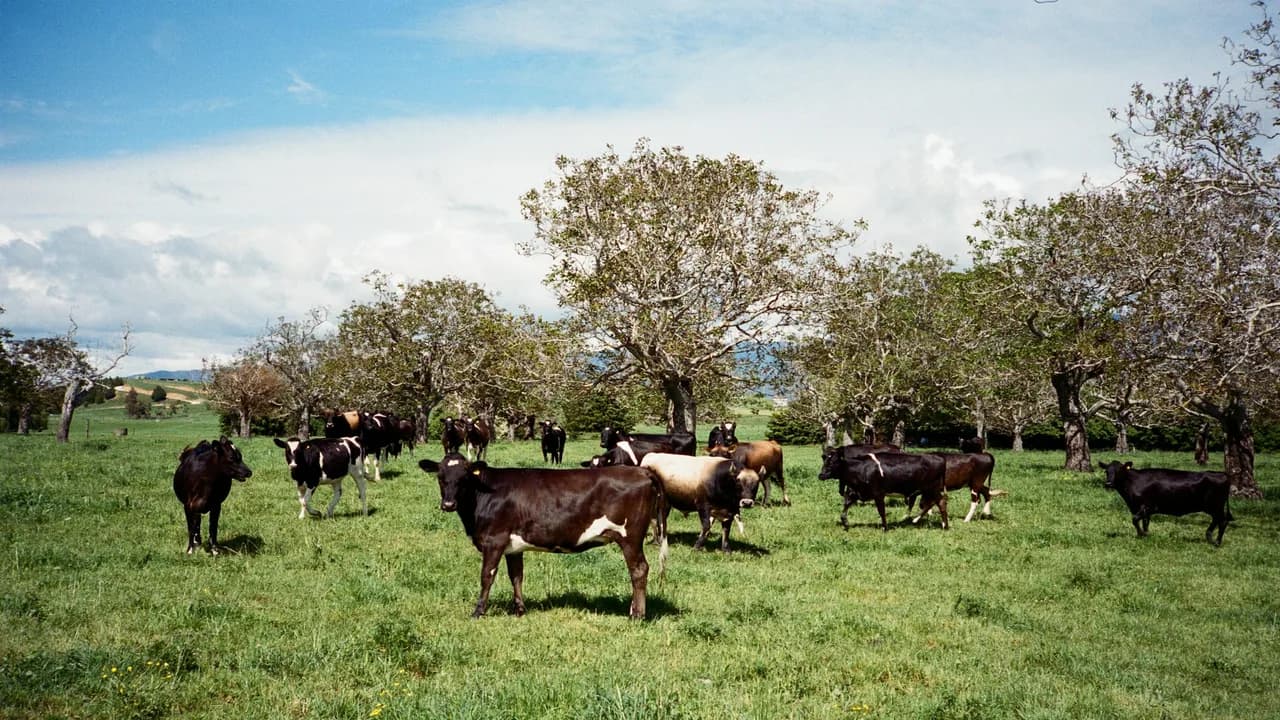
Cattle, including buffalo where relevant to local production systems, encounter gastrointestinal nematodes, flukes and other parasites depending on grazing and environment. Age, immunity, nutrition and prior exposure influence clinical outcomes. Dairy and beef systems may differ in how production effects are noticed.
Do not assume that cattle share identical parasite susceptibility or treatment needs with sheep or goats. Species-specific veterinary assessment remains essential.
Parasite Risks in Sheep and Goats
Sheep and goats are often more clinically sensitive to certain gastrointestinal nematodes than adult cattle in many grazing systems. Haemonchosis and related nematode challenges are frequently discussed in small-ruminant health education. Goats and sheep also differ from each other in browsing behaviour, immunology and management, so risk is not automatically identical between the two.
Young stock, periparturient animals and animals under nutritional stress may show clinical effects sooner. Again, signs and species context guide investigation; they do not replace diagnostics.
Responsible Livestock Parasite Control
A responsible programme may combine veterinary assessment, parasite-risk evaluation, appropriate diagnostics, correctly selected authorized medicines, accurate body-weight assessment where required by labelled instructions, adherence to approved product information, farm management, monitoring, record keeping and treatment-effectiveness evaluation.
There is no universal programme that fits every herd or flock. Different veterinary anthelmintics have different spectra, formulations, approved indications, species authorisations, dosing requirements and withdrawal requirements. Educational overviews of individual actives are available for albendazole, levamisole and oxyclozanide. Those pages do not assign a Prix product to a named parasite.
Anthelmintic Resistance
Anthelmintic resistance means a parasite population is less susceptible to a medicine that previously controlled susceptible parasites of that type. The World Organisation for Animal Health (WOAH) frames prudent anthelmintic use in grazing livestock as essential to preserving limited chemical options.
Selection pressure rises with unnecessary or poorly targeted treatment, incomplete administration and underdosing relative to approved instructions. Assuming all dewormers are interchangeable is poor practice. Monitoring whether treatment worked, under veterinary guidance, helps farms avoid false confidence. Rotating active-ingredient names on a fixed calendar is not a proven resistance-prevention strategy by itself. See also livestock deworming in Pakistan.
Why Medicine Alone Is Not a Complete Control Programme
Authorized medicines address susceptible parasites in treated animals. They do not remove eggs and larvae from pasture, correct nutritional deficits or replace diagnosis. Integrated control links medicine use, when indicated, with management, monitoring and professional oversight.
Monitoring and Farm Records
Useful records identify animals or groups, dates, products and batches where available, clinical observations and any diagnostic results. Records support food-safety compliance when withdrawal requirements apply, help veterinarians interpret repeated problems and reduce informal or duplicated treatment.
Food-producing animals treated with veterinary medicines may require product-specific withdrawal periods before meat or milk enters the food chain. There is no universal withdrawal period for all anthelmintics. Follow the approved information for the medicine actually used.

Learn More About Livestock Parasite Control
Prix Pharmaceutica manufactures veterinary pharmaceuticals for livestock and other animal categories. Explore verified catalogue information through the livestock hub and product catalogue. Technical literature is available under resources, and manufacturing context is summarised on Science & Quality. Industry context is outlined in veterinary pharmaceutical companies in Pakistan.
In Pakistan, veterinary medicines are regulated under the framework administered by the Drug Regulatory Authority of Pakistan (DRAP).

Signs alone do not confirm a parasite diagnosis. Parasite risks differ by animal and farm. Treatment selection, dosing and withdrawal requirements are product-specific. Follow approved product information and use veterinary guidance where appropriate. This article is educational and does not replace authorised labelling or professional veterinary advice.
References
- World Organisation for Animal Health (WOAH). Responsible and prudent use of anthelmintic chemicals to help control anthelmintic resistance in grazing livestock species.
- Merck Veterinary Manual. Overview of gastrointestinal parasites of ruminants.
- Merck Veterinary Manual. Overview of fluke infections in ruminants.
- Food and Agriculture Organization of the United Nations (FAO). The epidemiology, diagnosis and control of helminth parasites of ruminants.
- Food and Agriculture Organization of the United Nations (FAO). Guidelines on resistance management and integrated parasite control in ruminants.
- Drug Regulatory Authority of Pakistan (DRAP). Veterinary drugs.
Frequently Asked Questions
Prix Knowledge Centre
Stay informed on animal health insights
Receive updates on veterinary pharmaceuticals, poultry and livestock healthcare, and company news from Prix Pharmaceutica.
Explore our veterinary solutions
Browse veterinary pharmaceuticals and nutritional products for livestock, poultry, equine and companion animals, with technical support available on request.
Related articles
Liver Fluke in Cattle, Sheep and Goats: Signs, Diagnosis and Control
An educational overview of liver fluke in cattle, sheep and goats covering Fasciola, life cycle, snail hosts, possible signs, diagnosis, faecal testing limits and responsible control.
Read article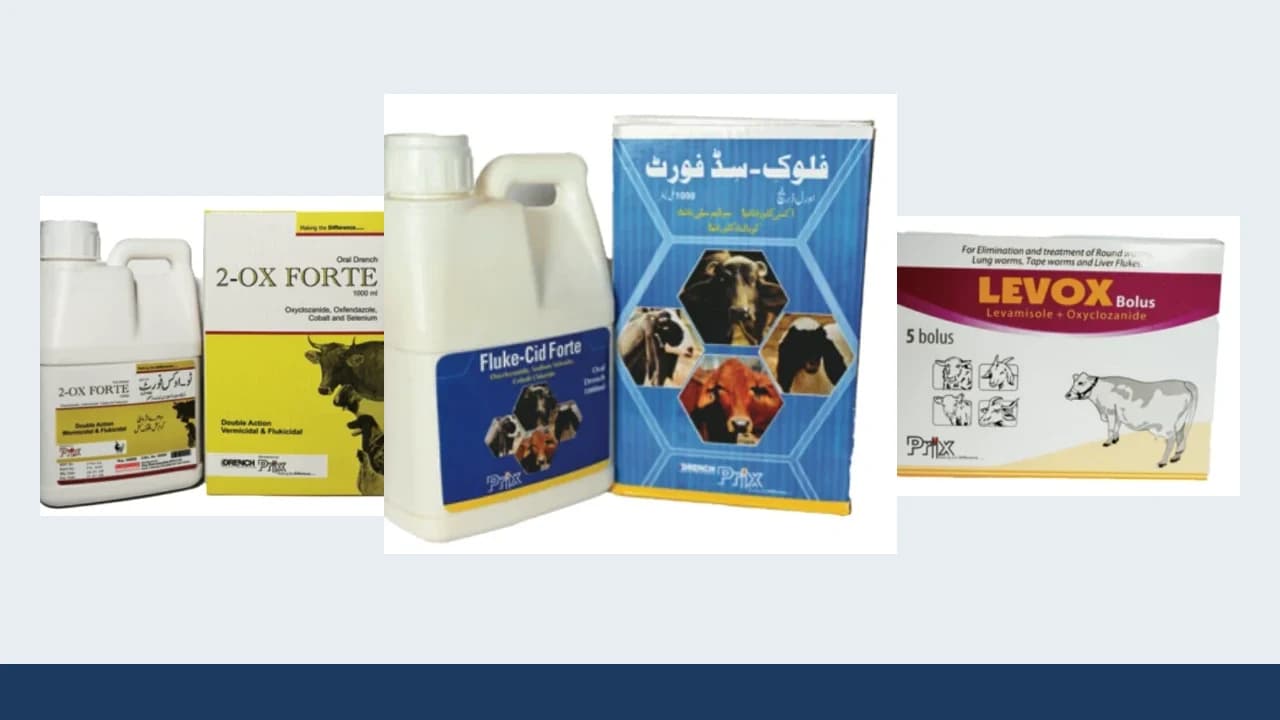
Oxyclozanide in Livestock: Veterinary Uses, Formulations and Responsible Fluke Control
An educational guide to oxyclozanide in livestock covering formulations, combination products, fluke-control context, resistance, withdrawal principles and verified Prix products.
Read article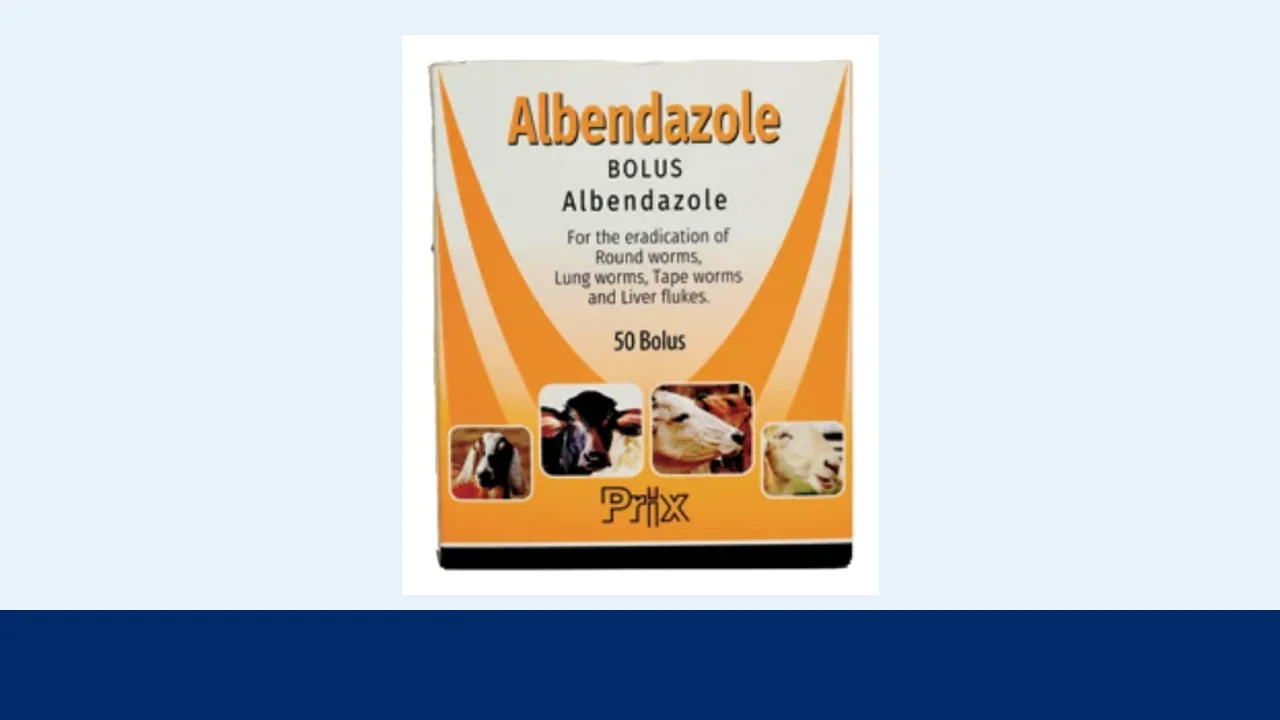
Albendazole in Veterinary Medicine: Uses, Dosage Forms and Responsible Use
An educational guide to albendazole in veterinary medicine covering dosage forms, formulation strength versus dose, resistance, withdrawal principles and verified Prix products.
Read article