
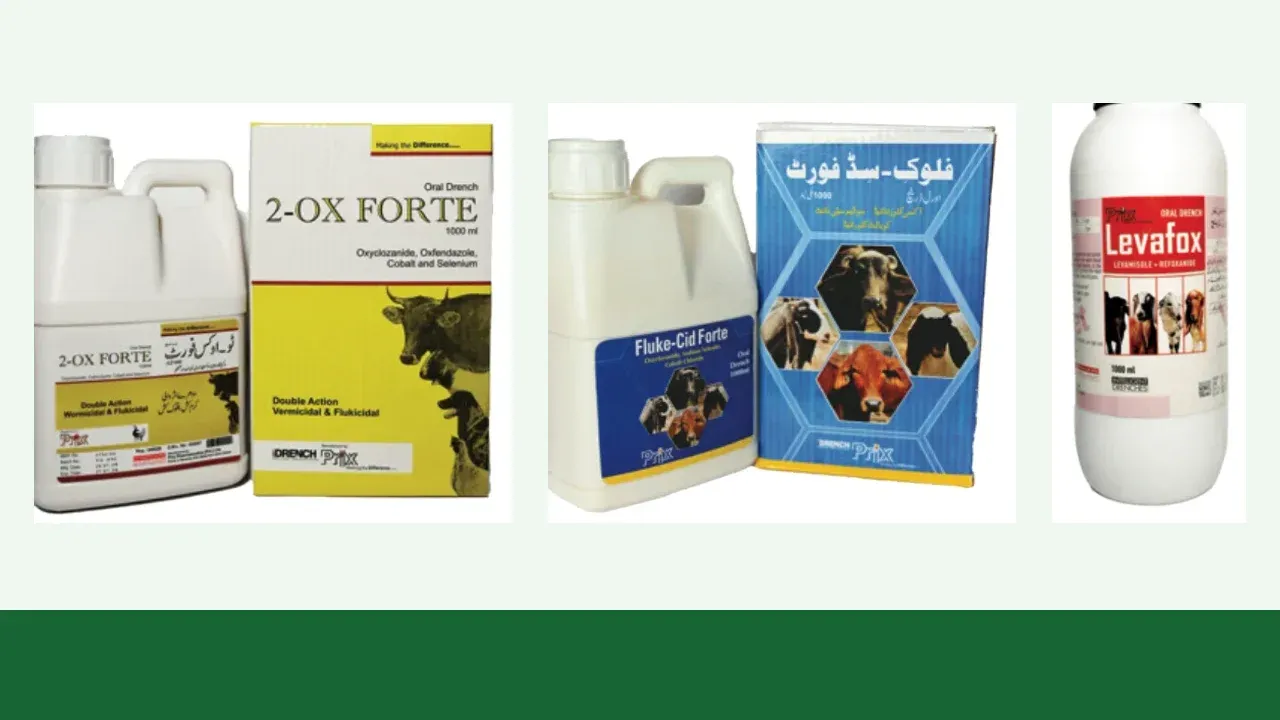
A livestock parasite-control portfolio visual using verified Prix packaging photography. Packaging artwork is unmodified.
Estimated reading time: 11 min read
Livestock deworming is a practical part of herd and flock health for cattle, buffalo, sheep and goats across Pakistan. Internal parasites can reduce condition, growth and production when burdens become significant, yet parasite control is not only a question of buying a drench or bolus. It depends on veterinary assessment, farm conditions, medicine quality and responsible use.
This guide explains what livestock deworming means, how major parasite groups differ at a high level, why diagnosis matters before treatment, what anthelmintics are, and how resistance, pasture management, withdrawal periods and documentation fit together. It is an educational article for farms, veterinarians and distributors. It is not a self-treatment protocol and does not replace approved product information or professional veterinary advice.
For broader industry context, see veterinary pharmaceutical companies in Pakistan. For verified livestock catalogue browsing, start with the livestock animal-health page.

Understanding Internal Parasites in Livestock
Internal parasites (helminths) live inside the animal for part of their life cycle. In grazing ruminants, infection is often linked to ingesting infective stages from pasture or contaminated environments. The World Organisation for Animal Health (WOAH) notes that helminth parasites of livestock can reduce production of meat, milk and fibre and can affect animal health and welfare when not managed prudently.
Parasite risk is not uniform. Climate, rainfall, pasture type, stocking density, mixed or communal grazing, housing practices and the age or immune status of animals all influence exposure. Young stock and animals under nutritional stress often face higher clinical risk, but farm patterns vary. Local veterinary knowledge remains essential.
Major Types of Livestock Parasites
Introductory veterinary parasitology groups many livestock helminths into three broad categories. Individual species, life cycles and clinical importance differ widely, so this overview is educational rather than diagnostic.
Gastrointestinal roundworms (nematodes)
Nematodes are the most commonly discussed gastrointestinal parasites of cattle, sheep and goats. They include groups that inhabit the abomasum and intestines. Depending on species and burden, they may contribute to reduced performance, gastrointestinal disturbance or, in some infections, anaemia and marked ill thrift. Presence of worms does not automatically mean clinical disease; significance depends on burden, host resilience and concurrent stress.
Tapeworms (cestodes)
Cestodes such as Moniezia species may be found in ruminants. Mild to moderate infections often produce limited clinical effect in many settings, while heavy burdens can be more relevant in young animals. As with other parasites, interpretation belongs with veterinary assessment rather than assumption from a single observation.
Flukes (trematodes), including liver fluke
Trematodes include liver flukes such as Fasciola species and other flukes that may affect ruminants where suitable intermediate hosts and environmental conditions exist. Liver fluke disease can present differently in cattle and small ruminants and may range from chronic production effects to more severe disease patterns. Epidemiology is place-specific. Do not assume fluke challenge is identical on every farm.
Possible Signs of Parasite Burdens
Animals with significant parasite burdens may show reduced body condition, slower growth or poorer production, changes in appetite, gastrointestinal disturbance, weakness or, in some parasitic infections, anaemia. These observations can prompt investigation. They cannot confirm a specific parasite diagnosis on their own.
Similar signs can arise from nutritional deficits, bacterial or viral disease, metabolic conditions, other parasitic problems or management shortfalls. Treating for worms based only on visible signs risks missing the true cause and may expose animals to unnecessary medicine.
Why Veterinary Diagnosis Matters
Veterinary parasite assessment typically starts with history: species and age groups affected, grazing exposure, recent introductions, previous treatments, nutrition and seasonal patterns. Physical examination helps place parasite suspicion in a broader clinical context.
Laboratory support may include faecal examination and faecal egg counts where appropriate, with further approaches depending on the suspected parasite and available diagnostic capacity. FAO guidance on helminth parasites of ruminants emphasises that detecting parasites is only part of the decision. The type and level of parasitism, and its significance for the herd or flock, should inform control choices.
This article does not describe do-it-yourself laboratory methods. Diagnostic testing should be planned and interpreted with veterinary professionals so results support, rather than replace, clinical judgement.
What Are Anthelmintics?
Anthelmintics are veterinary medicines used against helminth parasites. Different chemical and pharmacological classes exist, and products may differ in parasite spectrum, formulation and labelled species. Common educational references include benzimidazoles (for example albendazole or oxfendazole), imidazothiazoles (for example levamisole), salicylanilides or related compounds used against certain flukes or blood-feeding parasites (for example closantel or rafoxanide), oxyclozanide where labelled for fluke indications, and macrocyclic lactones such as ivermectin where relevant and approved. For a focused educational overview of albendazole dosage forms and responsible use, see albendazole in veterinary medicine. For levamisole formulations and single-active versus combination products, see levamisole in veterinary medicine. For oxyclozanide formulations and fluke-control context, see oxyclozanide in livestock.
Naming an active ingredient here is not a recommendation for any animal or parasite. Spectrum claims belong on the approved product label for a specific registered medicine. A medicine authorised for one species or indication must not be assumed suitable for another without veterinary review and label confirmation.
Why Anthelmintic Selection Requires Care
Correct selection depends on the parasite problem identified or reasonably suspected, the species and production system, the registered product indication, formulation and route, and the farm's treatment history. Body weight estimation, administration technique and adherence to approved dosage instructions matter because under-dosing and incomplete administration can leave parasites under selective pressure while failing to achieve the intended clinical goal.
This guide does not publish dosing tables, drench calculations or treatment calendars. Those details, where required, come from the approved product documentation and the attending veterinarian for the animals under care.
Understanding Anthelmintic Resistance
Anthelmintic resistance develops when a greater proportion of a parasite population survives exposure to a medicine that previously controlled susceptible parasites of that type. WOAH's guidance on responsible and prudent use of anthelmintic chemicals in grazing livestock describes resistance as a significant threat to animal health and productivity and frames it as a One Health-relevant challenge requiring coordinated stewardship.
Selection pressure increases when medicines are used repeatedly without need, applied to whole groups without considering which animals truly require treatment, or administered in ways that leave incomplete effects. Incorrect dosing practices and exclusive reliance on chemicals without farm management also feature in authoritative resistance discussions. No single technique guarantees prevention. Sustainable control combines diagnosis, targeted medicine use where indicated, pasture and husbandry measures, and monitoring of treatment outcomes under veterinary planning.
Rigid product-rotation recipes published without farm-level assessment are not a substitute for professional programmes. Where efficacy concerns arise, veterinarians may use diagnostic monitoring approaches appropriate to the setting. Interpretation should remain professional rather than informal.
Parasite Control Beyond Deworming Medicines
Medicines are tools within a wider programme. FAO work on integrated parasite control in ruminants emphasises moving beyond chemical reliance alone toward combinations of treatment and management that fit local epidemiology. Nutrition, overall animal condition and early attention to susceptible groups support resilience even when parasite exposure cannot be eliminated.
Pasture, Hygiene and Farm Management
Pasture management influences how many infective stages animals encounter. Considerations may include grazing patterns, avoiding unnecessary overcrowding on heavily contaminated ground, and managing manure so that infective material is not continually concentrated where animals graze or rest. Hygiene in housing and feeding areas reduces avoidable contamination.
Introduced animals can bring new parasite populations onto a farm. Quarantine and veterinary review before mixing groups are prudent biosecurity steps. None of these measures guarantees prevention on their own. Together with monitoring and responsible medicine use, they reduce avoidable disease pressure.
Withdrawal Periods and Food Safety
A withdrawal period is the time that must pass after treatment before meat or milk from a treated animal may enter the food chain, according to the approved product information and applicable rules. There is no universal withdrawal number for all dewormers.
Requirements can differ by active ingredient, formulation, dose and use, species, and whether the product is used in meat or milk production contexts. Always follow the specific product label and veterinary guidance for the medicine actually used.
Record Keeping and Responsible Medicine Use
Clear records of animals treated, products used, batch details where available, dates of administration and observed outcomes support food-safety compliance, veterinary follow-up and resistance-aware planning. Traceability also helps distributors and farms demonstrate responsible handling of veterinary medicines.
Storage and Handling of Veterinary Medicines
Anthelmintics should be stored according to approved labelling, usually in original packaging and away from conditions that may reduce product quality. Secure storage reduces accidental use and keeps medicines within professional control. Handling should follow label directions for the dosage form involved, whether oral drench, bolus or another authorised presentation.

Evaluating Veterinary Parasite-Control Products
Farms and distributors evaluating parasite-control medicines can review registration status for the relevant product, composition and dosage-form information, packing and storage guidance, manufacturing and quality documentation, and access to technical support. Price alone is a weak selection criterion. In Pakistan, veterinary medicines sit under the regulatory framework administered by the Drug Regulatory Authority of Pakistan (DRAP).
Background on manufacturing discipline and quality systems is available on the Science & Quality page. Product literature and catalogues are listed under resources.
Prix Pharmaceutica Livestock Health Portfolio
Prix Pharmaceutica manufactures and supplies veterinary pharmaceuticals from Lahore, with a livestock catalogue that includes verified anthelmintic presentations for professional use. The portfolio spans bolus and oral-drench formats with documented compositions drawn from approved source material and the integrated Orange Range catalogue.
Examples from the verified livestock parasite-control range include the Albendazole 300 mg bolus (registration 075645; distinct from Zoben 600), 2-Ox Forte oral drench (oxyclozanide and oxfendazole with selenium and cobalt), Fluke-Cid Forte, Levafox and Clomeb. Related presentations such as Vital Cure and Levox are also listed in the livestock catalogue. These links support product discovery and documentation review. They are not disease-specific treatment recommendations.
Always match product use to the animal species, approved indications and veterinary guidance for the situation at hand. Do not extrapolate from one product's label to another product with a similar active ingredient.
Explore Livestock Products and Resources
Browse the livestock category hub for species-organised navigation, open the full product catalogue when comparing presentations, or review professional materials via resources. For company background, visit the company overview.
Parasite-control decisions should consider the animal species, farm conditions, diagnostic findings, approved product information and professional veterinary guidance. Product labels and applicable withdrawal requirements should be followed. This article is for professional education and does not replace veterinary examination or authorised product labelling.
References
- World Organisation for Animal Health (WOAH). Responsible and prudent use of anthelmintic chemicals to help control anthelmintic resistance in grazing livestock species.
- Food and Agriculture Organization of the United Nations (FAO). The epidemiology, diagnosis and control of helminth parasites of ruminants (handbook).
- Food and Agriculture Organization of the United Nations (FAO). Guidelines on resistance management and integrated parasite control in ruminants.
- Merck Veterinary Manual. Overview of gastrointestinal parasites of ruminants.
- Drug Regulatory Authority of Pakistan (DRAP). Veterinary drugs.
Frequently Asked Questions
Prix Knowledge Centre
Stay informed on animal health insights
Receive updates on veterinary pharmaceuticals, poultry and livestock healthcare, and company news from Prix Pharmaceutica.
Explore our veterinary solutions
Browse veterinary pharmaceuticals and nutritional products for livestock, poultry, equine and companion animals, with technical support available on request.
Related articles
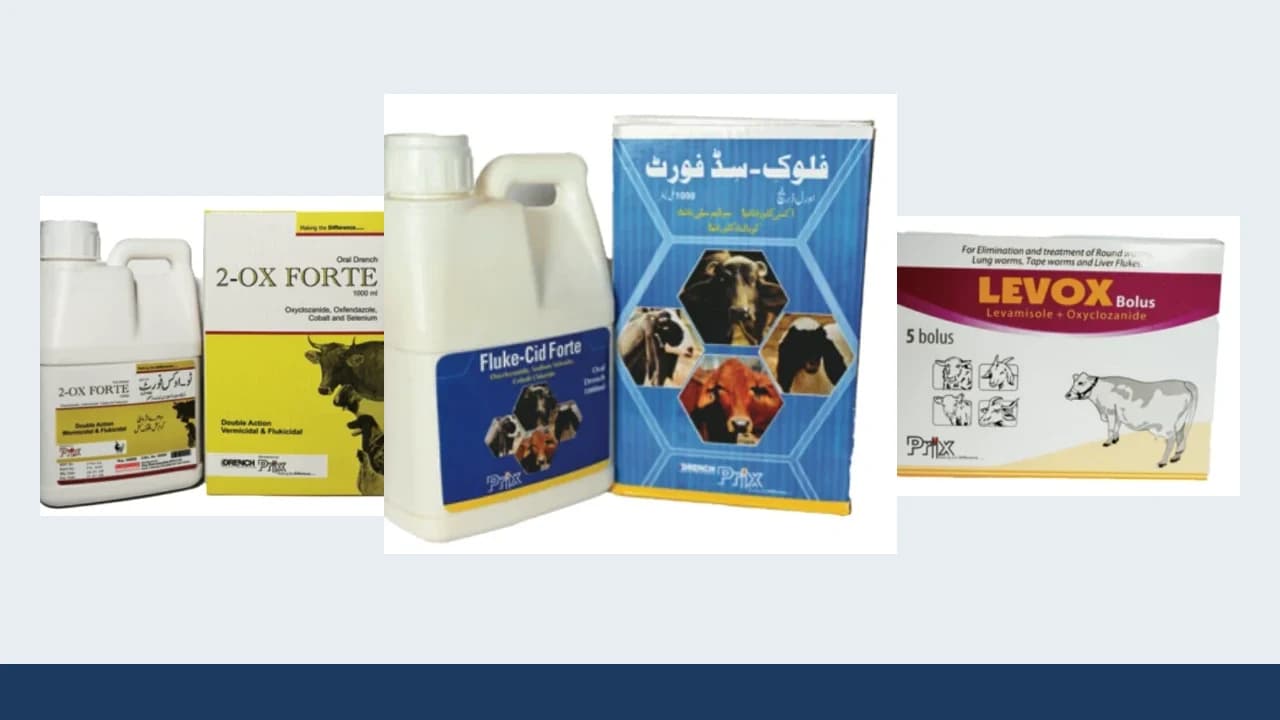
Oxyclozanide in Livestock: Veterinary Uses, Formulations and Responsible Fluke Control
An educational guide to oxyclozanide in livestock covering formulations, combination products, fluke-control context, resistance, withdrawal principles and verified Prix products.
Read article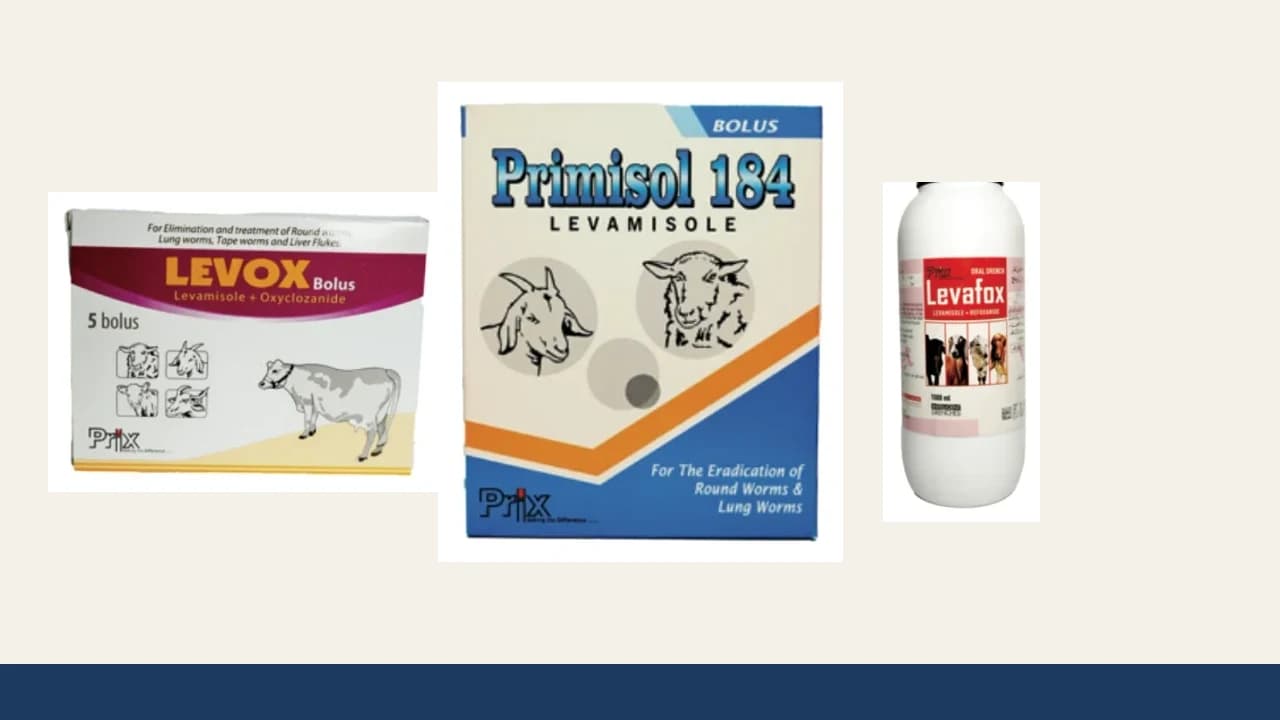
Levamisole in Veterinary Medicine: Uses, Formulations and Responsible Parasite Control
An educational guide to levamisole in veterinary medicine covering formulations, single-active versus combination products, resistance, withdrawal principles and verified Prix products.
Read article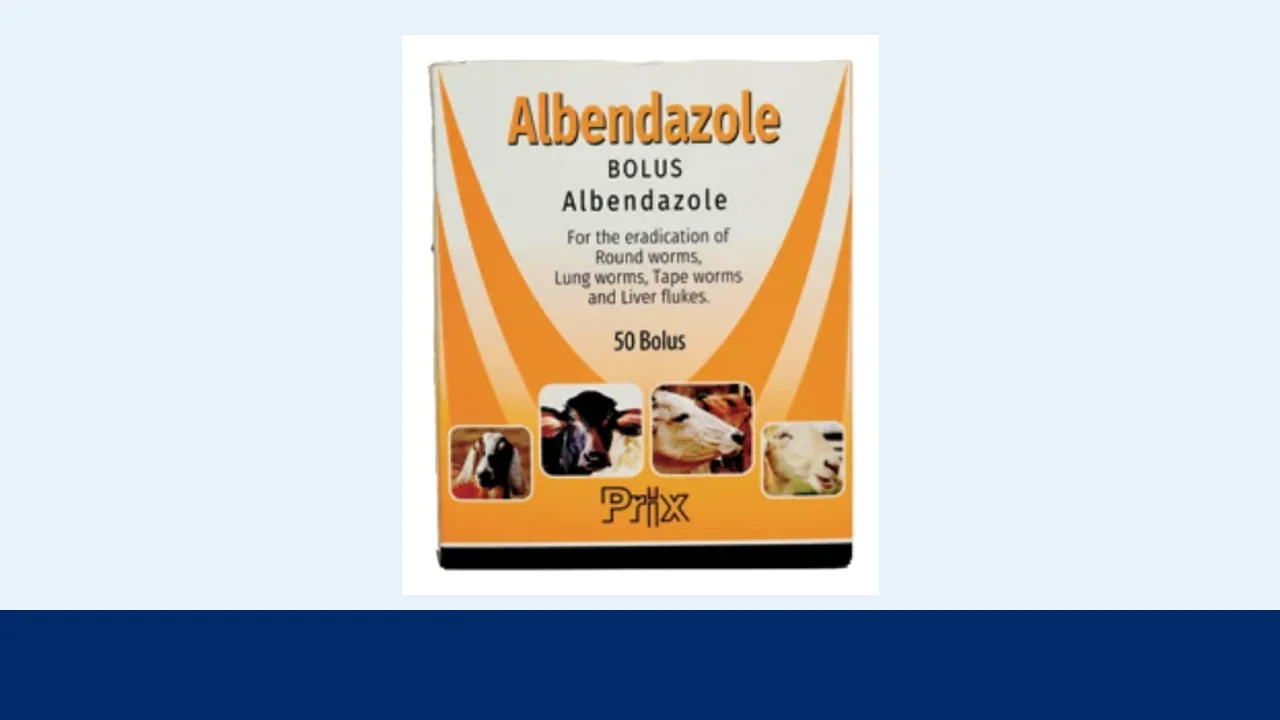
Albendazole in Veterinary Medicine: Uses, Dosage Forms and Responsible Use
An educational guide to albendazole in veterinary medicine covering dosage forms, formulation strength versus dose, resistance, withdrawal principles and verified Prix products.
Read article