
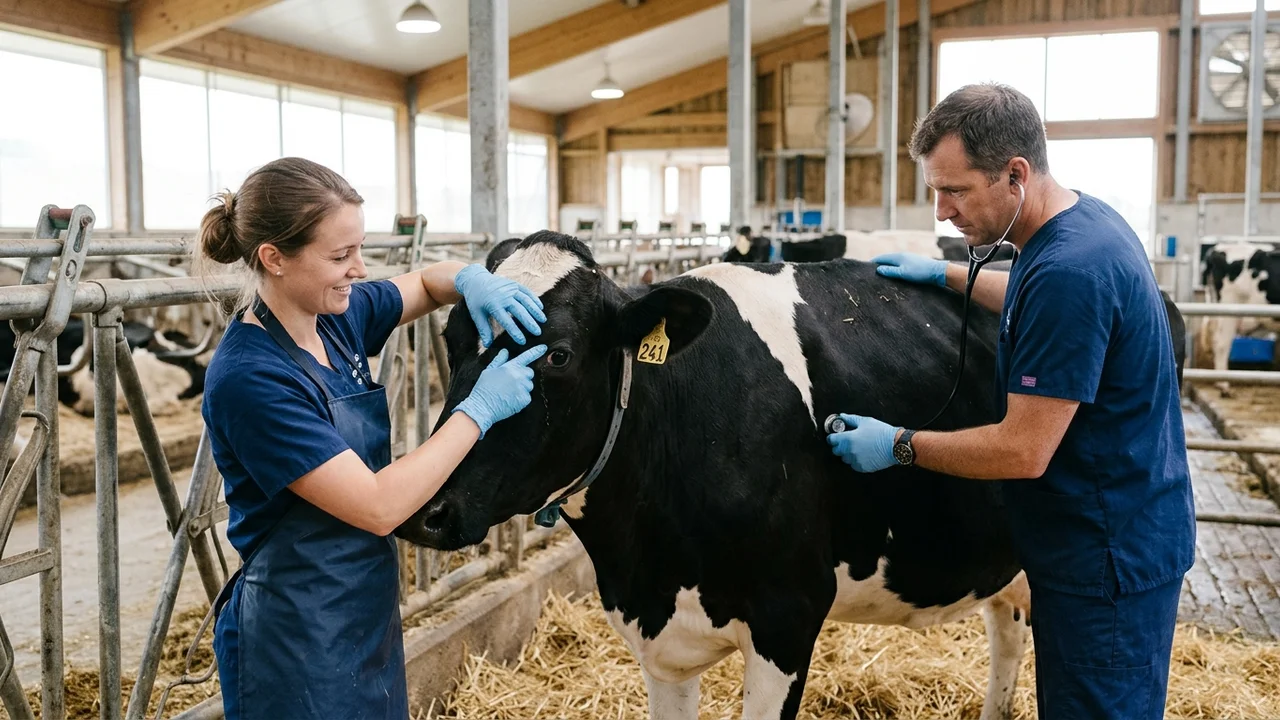
Antimicrobial stewardship in ruminant livestock balances animal welfare, clinical efficacy, and public health preservation.
Estimated reading time: 11 min read
Antimicrobial resistance (AMR) represents one of the most pressing global health challenges of the twenty-first century. Within food-animal production, the historical reliance on antibiotics as routine disease preventatives and compensatory buffers for suboptimal husbandry is undergoing fundamental reform. In Pakistan, where cattle, buffaloes, sheep, and goats form the economic backbone of millions of farming families, implementing antimicrobial stewardship (AMS) in livestock is both an ethical imperative and an economic necessity.
Veterinary antimicrobial stewardship does not mean denying sick animals necessary medical therapy. Rather, it embodies a systematic, evidence-based approach: ensuring antibiotics are utilized exclusively when clinically indicated, at correct dosages, for appropriate durations, and under qualified veterinary supervision. This comprehensive guide outlines the scientific principles, practical field challenges, diagnostic frameworks, and preventative protocols essential for establishing effective antimicrobial stewardship across Pakistani dairy and meat herds.
The One Health Paradigm and the Burden of AMR in South Asia
Under the One Health tripartite framework endorsed by the World Health Organization (WHO), World Organisation for Animal Health (WOAH), and Food and Agriculture Organization (FAO), human, animal, and environmental ecosystems are irrevocably interconnected.
In South Asia, high ambient temperatures, humid monsoon periods, intensive livestock clustering, and widespread over-the-counter availability of veterinary pharmaceuticals have historically created elevated selection pressure for resistant bacterial strains. Pathogens such as Escherichia coli, Salmonella spp., Staphylococcus aureus, and Pasteurella multocida are increasingly demonstrating multidrug resistance against first- and second-line therapeutics. Stewardship is the primary defense against losing these vital therapeutic options entirely.
Core Principles of Prudent Antimicrobial Selection
- Differential Diagnosis Prior to Prescription: Ensuring symptoms like fever, coughing, or diarrhea are bacterial in origin. For instance, viral viral respiratory challenges (such as Bovine Viral Diarrhea) or parasitic infections (such as liver fluke or gastrointestinal roundworms) cannot be resolved with antibiotics, and misdiagnosis wastes capital while escalating resistance.
- Tiered Antibiotic Classification: Aligning prescribing with the WHO/WOAH categorization of Critically Important Antimicrobials (CIAs). First-line treatments should utilize narrow-spectrum agents (such as narrow-spectrum penicillins or first-generation tetracyclines) where clinical evidence supports efficacy. Highest Priority Critically Important Antimicrobials (HPCIAs)—such as fluoroquinolones and third/fourth-generation cephalosporins—must be reserved strictly for severe refractory cases backed by laboratory sensitivity data.
- Accurate Body-Weight Dosing: Underdosing—frequently caused by farmers visual-guessing body weight without weigh tapes or scales—exposes bacteria to sub-inhibitory drug concentrations, directly selecting for resistant mutants. Overdosing risks organ toxicity and extends residue clearance intervals.
- Complete Therapeutic Courses: Enforcing the full treatment duration specified in approved product labelling, even if clinical symptoms visibly improve after 24 to 48 hours. Premature treatment cessation allows resilient bacterial subpopulations to recrudesce.
- Strict Adherence to Withdrawal Protocols: Documenting milk and meat withholding times meticulously to prevent violative drug residues from entering the human food supply.
Selective Dry-Cow Therapy: Modernizing Dairy Mastitis Management
In the dairy sector, the dry period represents a critical window for mammary tissue involution and regeneration. Historically, "blanket dry-cow therapy" (BDCT) involved infusing long-acting antibiotic tubes into every teat of every cow at dry-off. While historically effective in reducing early-dry period infections, BDCT exposes healthy quarters to unnecessary antibiotics.
- Cows with somatic cell counts (SCC) consistently below 200,000 cells/mL and zero clinical mastitis episodes during late lactation receive non-antibiotic internal bismuth subnitrate teat sealants alone. The physical barrier prevents pathogen entry through open teat canals without chemical selection pressure.
- Only quarters demonstrating elevated SCC, positive California Mastitis Test (CMT) scores, or documented clinical histories receive targeted antibiotic intramammary infusions, strictly matched with teat sealants.
Field trials demonstrate that implementing SDCT reduces overall antibiotic usage on commercial dairy farms by 35 to 55 percent without increasing post-calving clinical mastitis incidence.

Preventative Husbandry: Lowering Avoidable Disease Pressure
The most sustainable method for reducing antibiotic dependency is eliminating the environmental conditions that facilitate bacterial infection. Antibiotics cannot compensate for poor ventilation, filthy bedding, contaminated drinking water, or protein-energy malnutrition.
- Colostrum Management: Ensuring dairy calves receive at least 10 percent of their body weight in high-quality, immunologically dense colostrum within the first six hours of life. Early immunoglobulin absorption eliminates over 70 percent of avoidable neonatal calf scour and septicemia episodes.
- Environmental Sanitation: Dry, well-ventilated housing reduces ambient airborne pathogen loads and teat contamination. Daily removal of slurry and clean bedding significantly diminishes environmental mastitis risks caused by E. coli and Streptococcus uberis.
- Immunization Programs: Routine vaccination against endemic bacterial and viral diseases—such as Hemorrhagic Septicemia (HS), Blackquarter (BQ), Foot-and-Mouth Disease (FMD), and Enterotoxemia—creates foundational herd immunity that prevents primary pathology and secondary bacterial complications.
- Biosecurity and Quarantine: Quarantining newly purchased animals for 21 days with dedicated monitoring prevents introducing multidrug-resistant pathogens into established herds.
For parallel poultry insights, consult our companion guide on responsible antibiotic use in poultry production.
Record-Keeping, Treatment Logs, and Treatment Protocols
Traceability is the cornerstone of professional stewardship. Every commercial dairy and feedlot operation must maintain immutable treatment registers documenting: date of administration, individual animal identification (tag number), diagnosed condition, specific medicine administered (with batch and expiry details), administered dose, route, administering technician, and calculated milk/meat withdrawal release dates.
Regular review of these logs by the attending herd veterinarian highlights recurring disease hotspots, identifies potential treatment failure patterns, and informs adjustments to herd vaccination or nutritional regimens.
Key Takeaways for Livestock Producers and Veterinarians
- Diagnosis Precedes Medication: Never treat symptoms blindly; establish bacterial etiology before deploying antimicrobial agents.
- Guard Reserve Molecules: Reserve fluoroquinolones and advanced cephalosporins for culture-verified refractory infections.
- Embrace Selective Dry-Cow Therapy: Use internal teat sealants on healthy quarters to cut dairy antibiotic consumption in half.
- Husbandry is the Best Medicine: Superior colostrum intake, clean bedding, and comprehensive vaccination dramatically reduce the clinical need for antibiotics.
- Respect Withdrawal Times: Guard public health and milk processor acceptance by enforcing zero-tolerance for violative residues.
References and Authoritative Guidelines
- WOAH Terrestrial Animal Health Code: Chapter on Responsible and Prudent Use of Antimicrobial Agents in Veterinary Medicine.
- WHO List of Medically Important Antimicrobials for Human Medicine — Categorization of CIAs and HPCIAs.
- FAO: Action Plan on Antimicrobial Resistance — Food and agricultural sector stewardship resources.
- Drug Regulatory Authority of Pakistan (DRAP) — Guidelines on veterinary pharmaceutical labelling and prescription compliance.
Frequently Asked Questions
Prix Knowledge Centre
Stay informed on animal health insights
Receive updates on veterinary pharmaceuticals, poultry and livestock healthcare, and company news from Prix Pharmaceutica.
Explore our veterinary solutions
Browse veterinary pharmaceuticals and nutritional products for livestock, poultry, equine and companion animals, with technical support available on request.
Related articles

Pakistan Veterinary Pharmaceutical Industry Outlook 2027: Regulatory Modernization, Market Dynamics, and Quality Standards
An authoritative 2026–2027 strategic overview of Pakistan’s veterinary pharmaceutical sector, examining DRAP cGMP regulations, supply-chain resilience, export growth, and shifting livestock market dynamics.
Read article
Livestock Deworming in Pakistan: Parasite Control, Anthelmintics and Veterinary Guidance
An educational guide to livestock deworming in Pakistan covering internal parasites, anthelmintics, resistance, farm management and responsible veterinary parasite control.
Read article
Responsible Antibiotic Use in Poultry: Veterinary Guidance and Antimicrobial Stewardship
A stewardship guide to responsible antibiotic use in poultry: diagnosis first, antimicrobial resistance, withdrawal principles, biosecurity and professional veterinary guidance.
Read article