
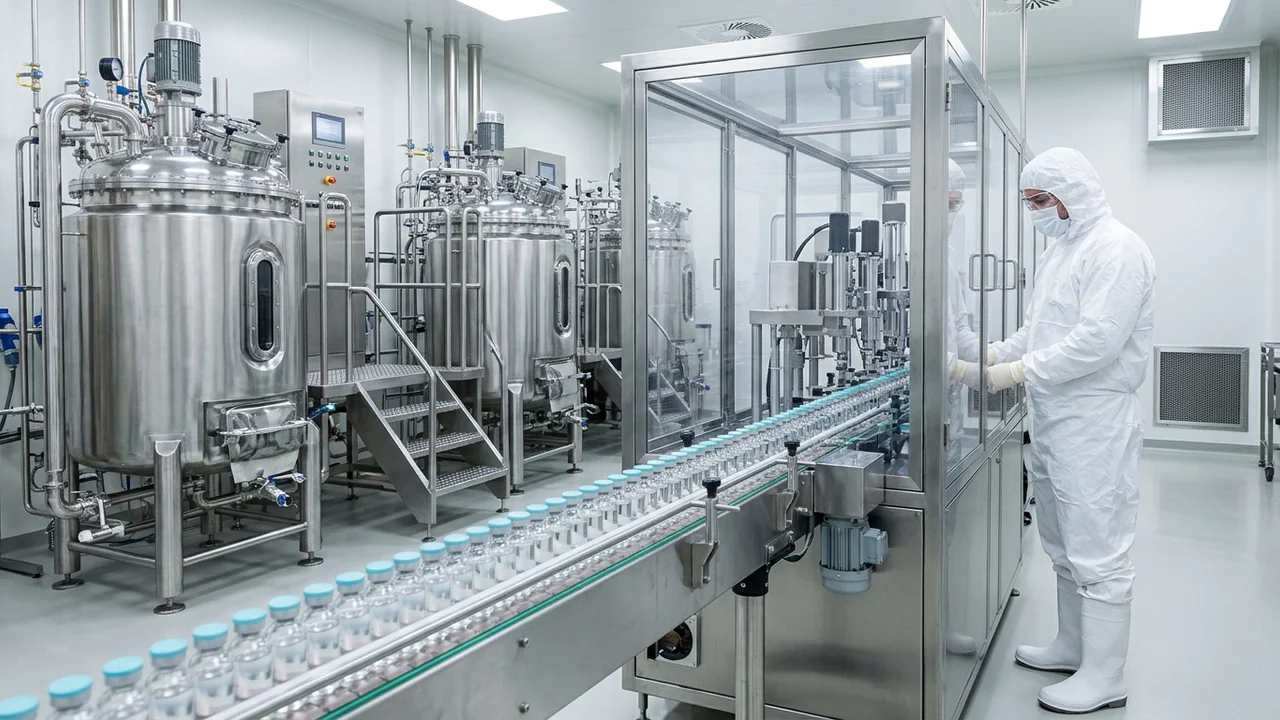
Pakistan’s veterinary pharmaceutical sector is evolving toward rigorous GMP enforcement, localized synthesis, and increased export readiness heading into 2027.
Estimated reading time: 10 min read
Pakistan’s veterinary pharmaceutical industry stands at a pivotal juncture as it progresses toward 2027. Once characterized largely by basic formulation and price-driven domestic distribution, the sector is undergoing structural modernization driven by stringent regulatory expectations, expanding commercial livestock production, and rising international trade opportunities. For veterinary professionals, farm managers, and industry investors, understanding these macro forces is essential for strategic planning.
With livestock contributing over 62 percent of Pakistan’s agricultural value added and more than 14 percent to national GDP, animal healthcare is no longer viewed merely as an auxiliary farm input; it is a foundational pillar of national food security, rural livelihood stability, and foreign exchange generation. In this analytical outlook, we examine the regulatory, commercial, technological, and export trends shaping Pakistan’s veterinary medicine landscape over the 2026–2027 horizon.
Macroeconomic Drivers and Structural Livestock Demands
The demand for veterinary therapeutics and nutritional supplements is directly tied to national herd demographics and demographic shifts in food consumption. Pakistan boasts one of the world’s largest livestock populations, with over 100 million heads of cattle and buffaloes, alongside rapidly expanding small ruminant flocks and a multi-billion-rupee commercial poultry sector.
As urbanization accelerates and household purchasing power adjusts, commercial production efficiency has become paramount. Poultry producers in hubs such as Rawalpindi, Faisalabad, and Karachi operate sophisticated closed-house environments where flock density demands uncompromising health maintenance. Simultaneously, corporate dairy enterprises across Punjab and Sindh are replacing informal backyard practices with high-yielding dairy breeds and modern silage feeding systems, dramatically escalating the requirement for reliable antibiotics, metabolic balancers, and reproductive hormones.
Regulatory Evolution: DRAP Enforcement and Global cGMP Standards
The single most transformative factor within the industry between 2025 and 2027 is the increasing rigor of regulatory oversight administered by the Drug Regulatory Authority of Pakistan (DRAP). Historically, variance in manufacturing quality created disparities between premium manufacturers and informal market operators. That gap is closing rapidly due to updated cGMP guidelines aligned with international benchmarks.
- HVAC and Cleanroom Validation: Mandatory installation of certified HEPA filtration, differential pressure cascades, and automated environmental monitoring systems across oral liquid, sterile injectable, and dry powder production lines.
- Analytical Testing Rigor: Routine deployment of High-Performance Liquid Chromatography (HPLC) and atomic absorption spectroscopy to verify active ingredient assays, dissolution profiles, and stability across real-time Zone IV climatic conditions.
- Pharmacovigilance and Traceability: Enforced batch recording, tamper-evident secondary packaging, and structured pharmacovigilance channels allowing rapid traceability from finished distributor stock back to active pharmaceutical ingredient (API) certificates of analysis.
Facilities that invest in these quality frameworks—exemplified by Prix Pharmaceutica’s manufacturing operations—are securing durable commercial advantages while unvalidated formulators face license revocations and market exclusion.
Supply-Chain Dynamics: Raw Material Sourcing and Currency Headwinds
Despite domestic manufacturing capacity in formulation and filling, Pakistan’s veterinary medicine industry remains heavily import-reliant for starting materials. Approximately 85 to 90 percent of active pharmaceutical ingredients, including essential antimicrobials (such as amoxicillin, enrofloxacin, and oxytetracycline) and anthelmintics (such as albendazole and levamisole), are imported from China, India, and Europe.
Over the 2026–2027 horizon, currency exchange fluctuations and international energy tariffs present continuous margin pressures. Forward-thinking manufacturers are responding through strategic procurement mechanisms: establishing long-term volume contracts, diversifying supplier qualified rosters, and maintaining buffer inventories of essential veterinary raw materials. Concurrently, academic-industrial dialogues between veterinary universities and national chemical bodies are examining the long-term feasibility of domestic basic synthesis for high-volume molecules.

Therapeutic Portfolio Shifts: Antimicrobial Stewardship and Prophylactic Alternatives
Global and domestic concern regarding antimicrobial resistance (AMR) is profoundly redirecting product formulation and veterinary prescribing patterns. In alignment with the World Organisation for Animal Health (WOAH) and Pakistan’s National Action Plan on AMR, routine prophylactic flock treatment and antibiotic growth promoters are facing phased elimination.
- Water-Hygiene and Gut-Health Solutions: Synergistic buffered acidifiers, organic acid complexes, and gut-stabilizing botanicals that suppress enteric bacterial proliferation without generating resistance pressure.
- Nutritional and Electrolyte Balancers: High-bioavailability amino acid mixtures, chelated trace minerals, and targeted metabolic stimulants that maintain physiological performance during summer heat stress and vaccination stress.
- Focused, Verified Injectables: Precision injectable anti-infectives and non-steroidal anti-inflammatories reserved strictly for diagnosed clinical disease under professional veterinary guidance.
For broader clinical context on responsible antimicrobial usage, explore our guide on responsible antibiotic use in poultry and our overview of veterinary pharmaceutical manufacturing in Pakistan.
Export Opportunities: Central Asia, East Africa, and Beyond
A defining trend for leading Pakistani manufacturers through 2027 is internationalization. Driven by competitive conversion costs and growing compliance with international cGMP standards, Pakistani veterinary exporters are actively securing drug registrations across the Middle East, East Africa (including Tanzania, Kenya, and Uganda), and Central Asian Republics (such as Uzbekistan and Tajikistan).
Participation in international expos—such as Prix Pharmaceutica’s exhibition at MEDEXPO Africa—demonstrates substantial international appetite for Pakistani-manufactured anthelmintics, injectable vitamins, and broad-spectrum water-soluble medications when supported by rigorous documentation and credible quality controls.
Key Takeaways for Veterinary Stakeholders
- Regulatory Consolidation: DRAP’s enhanced cGMP enforcement will continue weeding out non-compliant operators, consolidating commercial market share among validated manufacturers.
- Preventative Portfolio Primacy: Antimicrobial stewardship is accelerating demand for water acidifiers, nutritional electrolytes, and gut-stabilizing feed supplements over indiscriminate antibiotic use.
- Commercial Farm Scale: The transition toward corporate dairy farming and high-density environmentally controlled poultry housing elevates the requirement for documented batch efficacy and strict quality assurance.
- Export Horizon: International product registration across East Africa and Central Asia offers high-growth avenues for Pakistani manufacturers with validated quality credentials.
References and Authoritative Sources
- Drug Regulatory Authority of Pakistan (DRAP) — Regulatory standards, cGMP guidelines, and licensing frameworks for veterinary therapeutic goods.
- World Organisation for Animal Health (WOAH) — Global animal health standards, surveillance datasets, and AMR stewardship policies.
- Food and Agriculture Organization (FAO) Pakistan — Livestock population statistics, sector economic contributions, and food security assessments.
- Government of Pakistan: Ministry of Finance — Pakistan Economic Survey (Agriculture and Livestock Chapter).
Frequently Asked Questions
Prix Knowledge Centre
Stay informed on animal health insights
Receive updates on veterinary pharmaceuticals, poultry and livestock healthcare, and company news from Prix Pharmaceutica.
Explore our veterinary solutions
Browse veterinary pharmaceuticals and nutritional products for livestock, poultry, equine and companion animals, with technical support available on request.
Related articles

Responsible Antibiotic Use in Poultry: Veterinary Guidance and Antimicrobial Stewardship
A stewardship guide to responsible antibiotic use in poultry: diagnosis first, antimicrobial resistance, withdrawal principles, biosecurity and professional veterinary guidance.
Read article
Poultry Medicine in Pakistan: A Practical Guide to Poultry Health Products
A practical guide to poultry medicine in Pakistan covering product categories, veterinary diagnosis, responsible antimicrobial use, biosecurity, storage and supplier evaluation.
Read article
Veterinary Pharmaceutical Companies in Pakistan: Quality, Manufacturing and Animal Health
How veterinary pharmaceutical companies in Pakistan support animal health through manufacturing quality, registration, dosage-form selection and responsible medicine use.
Read article